
Psychotherapy, often called talk therapy, is a treatment approach that helps people identify and work through troubling thoughts, emotions, and behaviors using evidence-based techniques. It may be used as one part of a complete treatment plan or as ongoing support in aftercare for conditions such as substance use disorders and other mental health concerns.
Individual therapy is one form of talk therapy. It involves one client meeting privately with a licensed mental health professional to address personal challenges and build coping skills for recovery.
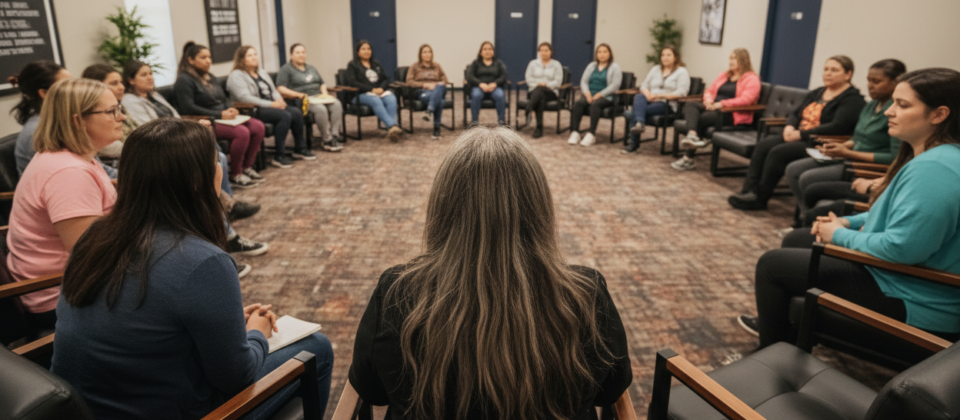
Group therapy is another form, often referred to as group psychotherapy. In this format, one or more therapists lead a session where group members meet together, share experiences, and develop interpersonal skills. Group therapy involves collaboration among members of the group and offers the chance to learn from other members in a structured environment.
Both approaches are effective, and they are often combined in treatment at Red Ribbon Recovery Indiana to balance personal growth with peer connection.
What is individual therapy?
Individual therapy is a private, one-on-one form of counseling between a client and a licensed professional. Sessions provide a safe space to talk openly about thoughts, emotions, and behaviors that may be contributing to substance abuse or other challenges. The therapist works with the client to identify concerns, ask questions that encourage reflection, and apply techniques grounded in clinical psychology and evidence-based behavior therapy.
Unlike advice from friends or family, individual therapy is structured, confidential, and guided by a professional who understands how to address complex issues. Over time, the process helps clients gain greater self awareness and learn strategies for handling stress, cravings, and emotional triggers.
Individual therapy for substance use treatment
Individual therapy is often included in treatment for substance use disorders. These one-on-one sessions give clients the privacy to discuss difficult experiences, understand the reasons behind drug or alcohol use, and set goals for recovery. Working directly with a therapist makes it easier to recognize triggers and practice strategies for avoiding relapse.
Different approaches may be used depending on the client’s needs.
- Cognitive behavior therapy (CBT). Cognitive behavioral therapy (CBT) helps clients see how thoughts and feelings influence behavior and teaches ways to reduce cravings and prevent relapse.
- Motivational interviewing (MI). Motivational interviewing (MI) encourages commitment to change by addressing mixed feelings about recovery.
- Contingency management. Contingency management uses rewards to reinforce positive steps like attending sessions or staying sober.
- Psychodynamic therapy. Psychodynamic therapy explores past experiences that may still affect current choices.
Individual therapy can also address co-occurring mental health concerns such as depression, bipolar disorder, and anxiety disorders. In some cases, it may be used to support people living with eating disorders or post traumatic stress disorder, conditions that can complicate recovery if left untreated. Addressing both substance use and mental health at the same time lowers the risk of relapse and helps clients build stability.
You can overcome addiction. Reach out to discover:
Advantages of individual counseling
Individual therapy offers privacy and focus that can be difficult to find in other settings. Clients can talk openly with a therapist about sensitive issues, knowing that the conversation is confidential. The one-on-one format makes it possible to look closely at personal history, patterns of behavior, and specific goals for recovery.
These sessions also allow the therapist works directly with the client to adjust the pace and style of treatment. Some people may move quickly through structured approaches, while others need more time to build trust and practice new skills. Over time, this process supports greater self understanding, improved confidence, and the ability to apply new strategies outside of the therapy room.
Another benefit is the relationship that develops between client and therapist. This professional bond, sometimes called a therapeutic alliance, gives clients a safe foundation to work through difficult emotions and receive constructive guidance. Individual therapy also equips clients with tools they can use to strengthen their wider support network, from family to peers, once they leave treatment.
Disadvantages of individual therapy
Individual therapy is effective, but it does have limitations. The cost can be higher than group-based options, which makes it less accessible for some clients. Sessions are also limited to one client and one therapist, so there is no opportunity to learn from other members who might share similar struggles.
Because the focus is entirely on one person, progress depends heavily on their willingness to participate. If a client is not motivated to attend consistently or practice new strategies between sessions, improvement can be slow.
Another drawback is the lack of peer interaction. Unlike group settings, there is no chance to build a sense of community or receive support from a broader support network during sessions. For some people, this can make therapy feel more isolating.
Even with these challenges, individual therapy remains an important treatment option for substance abuse and related concerns, especially when combined with group therapy to balance personal focus with shared experience.
WE ARE AVAILABLE 24/7
Request a call for answers and help.
If you or someone you care about is struggling with addiction or mental health problems, request a call to speak with a knowledgeable treatment specialist. Our team is here to help you understand your options for care. There is no cost or obligation to enter treatment by requesting a call.
"*" indicates required fields
What is group therapy
Group therapy is a structured form of counseling and a type of group psychotherapy. In this approach, one therapist or sometimes one or more therapists lead a session where several people meet together to work on recovery goals. A group counselor guides the discussion, encourages participation, and makes sure the focus stays on progress.
Group therapy involves more than simply talking. It gives group members the chance to share experiences, listen to other members, and practice communication in a safe therapy setting. These sessions are designed to help people build social skills, reduce isolation, and learn healthier ways to manage challenges.
Some groups are structured as an open group, where new members can join at any point, while others operate as a closed group, with the same participants moving through treatment together. Each format has advantages: open groups bring fresh perspectives, while closed groups create consistency and trust.
Because of this structure, group therapy is considered a professional form of group treatment, distinct from informal support meetings. It combines the benefits of a supportive community with the guidance of trained clinicians, making it one of the most widely used and effective options in addiction and mental conditions.
Group therapy for substance abuse treatment
Group therapy is one of the most common forms of group treatment for addiction and recovery. These sessions are structured and therapist-led, giving clients the opportunity to share challenges, hear different perspectives, and practice new coping strategies. The shared group experience helps reduce feelings of isolation and reinforces the idea that recovery is possible when people work together.
Different approaches may be used in group therapy sessions, depending on the needs of the participants.
- Psychoeducational groups. Psychoeducational groups teach clients about addiction, mental health conditions, and strategies for long-term recovery.
- Skills development groups. Skill development groups focus on teaching tools that improve daily functioning and strengthen interpersonal skills.
- Cognitive behavioral therapy (CBT) groups. CBT groups help clients recognize harmful thought patterns and behaviors that drive addiction, and replace them with healthier responses.
- Support groups. Support groups provide encouragement and peer accountability in a structured, supportive environment.
- Interpersonal process groups. Interpersonal process groups explore how relationships shape behavior, using interpersonal learning to improve connections.
Research consistently shows that group therapy is as effective as individual therapy for treating substance use disorders and co-occurring mental conditions. In some cases, the benefits of group therapy are even greater because of the accountability and factors unique to the group dynamic.
OUR PROCESS
1
Get in touch
with us2
Do a free
assessment3
Review your
insurance4
Start your
addiction treatment
Start your recovery today!
(317) 707-9848Group therapy goals
Group therapy is designed to help clients build skills, strengthen connections, and apply what they learn in everyday life. Goals often shift across different stages of recovery, but the focus is always on progress and accountability within the group setting.
Some of the most common goals include becoming more self aware, practicing new coping strategies, and improving interpersonal relationships. Many clients also benefit from opportunities for existential factors, such as recognizing shared human struggles, and from therapeutic factors like encouragement and constructive feedback from peers.
Over time, these goals translate into lasting change. By participating actively and learning from the perspectives of group members, clients can improve communication, reduce isolation, and build confidence to maintain recovery long after sessions end.
Advantages of group therapy
The benefits of group therapy extend beyond learning coping strategies. Being surrounded by peers with similar struggles creates a strong sense of community. Hearing personal stories from group members can ease feelings of isolation and promote learning.
The structure of group therapy also helps clients practice socializing techniques and build stronger social skills. Many clients report that sharing their feelings in this setting leads to greater trust and openness. These interactions provide opportunities to receive encouragement and valuable feedback from group members, which reinforces progress and boosts confidence.
Another advantage is that group therapy can serve as a model for life outside treatment. The group experience teaches clients how to navigate conflict, communicate more effectively, and strengthen their support network. For many, this makes recovery feel more manageable and sustainable.
Disadvantages of group therapy
Group therapy can be highly effective, but it is not the right fit for everyone. Confidentiality is harder to control in a group, since other group members may not always keep details private. This makes it riskier to share deeply personal concerns compared to a one-on-one therapy session.
Another challenge is that attention must be shared among members of the group, which can leave less time for individual needs. The presence of new members can also change the dynamic, especially in an open group where participants come and go. By contrast, a closed group provides more stability but limits the diversity of perspectives that rotating members can bring.
For people struggling with social anxiety or certain diagnoses such as a personality disorder, the group format can feel intimidating. Others with ongoing health issues like chronic pain may find it difficult to participate consistently.
Even with these challenges, group therapy remains one of the most widely used and effective forms of group psychotherapy, especially when combined with individual sessions to balance personal focus and peer support.
Free Insurance Check
Our rehab center accepts most insurance plans.
Check if your insurance will cover the cost of treatment by filling out our confidential insurance form. We accept most insurance plans.

How long does therapy take to work
The timeline for therapy depends on the individual, the type of treatment, and the issues being addressed. Some clients benefit from short-term work that lasts about 12 sessions, while others continue for months or years as they work through more complex challenges.
In individual psychotherapy, progress may happen more quickly for clients who are ready to engage fully, while others may need more time to build trust with the therapist. This process is part of the broader therapeutic process, where the pace is matched to the client’s readiness and goals.
Group psychotherapy often runs on a longer schedule. A group therapist may guide the same group across different stages of recovery, from early stabilization to relapse prevention. This structure allows clients to practice skills repeatedly, learn from other groups, and adjust strategies as their needs evolve.
Research, including findings from at least one systematic review, shows that both individual psychotherapy and group psychotherapy can be effective. Results are strongest when the two formats are combined, as the balance of private reflection and shared accountability creates durable change.
What happens in a therapy session
In individual therapy, the first few meetings often involve an assessment. The therapist learns about the client’s history, goals, and current challenges, then develops a plan that fits those needs. Over time, sessions may include approaches such as cognitive behaviour therapy, motivational interviewing, or trauma-informed care. The aim is to help the client work through personal issues, build resilience, and strengthen long-term recovery.
In group therapy sessions, five to fifteen participants typically meet with a licensed therapist. The therapist works to maintain focus, encourage participation, and ensure confidentiality. The structure of each session can vary, but most include sharing a personal story, practicing coping strategies, and reflecting on personal feelings. Through this process, clients gain insight into their behavior and build interpersonal learning that can improve daily life.
Group work also emphasizes therapeutic factors such as support, trust, and encouragement. These elements help members of the group feel connected, receive valuable feedback, and develop stronger bonds with their peers. For many, this setting becomes a practice ground for strengthening interpersonal skills and building the confidence to apply them outside treatment.
Meet the team of specialists at Red Ribbon Recovery Indiana

Elliott Hughes
Program Director
Tianna Ceaser, LCSW
Clinical Director
Amanda Ingram, CADAC II
Case ManagerIndividual vs group vs family counseling
Individual therapy provides a private space to focus on unique concerns. Clients work one-on-one with a therapist to explore history, address triggers, and practice strategies that support recovery. This format allows for close attention and can be adapted to different needs, though it does not include the shared perspective that comes from a group experience.
Group therapy, by contrast, relies on the dynamic created among participants. The structure of group psychotherapy gives people the chance to learn from other group members, share openly, and practice new skills. These sessions highlight the importance of therapeutic factors such as support, encouragement, and accountability, which are difficult to replicate in one-on-one care. In many ways, the benefits of group therapy extend beyond treatment, as the group often models real-life interpersonal relationships and helps clients build confidence in social settings.
Family therapy brings loved ones into the counseling process. Sessions explore how addiction or mental health concerns affect the household and help improve communication between parents, children, and partners. Involving the family gives clients a stronger foundation for recovery while also helping relatives develop healthier patterns of support.
Together, individual, group, and family therapy represent multiple modalities within addiction and mental health care. When combined, they balance personal focus, peer connection, and family involvement, creating a well-rounded path toward healing.
Rehab might feel like a big step, but remember why you're here—you’re looking for a way forward. We can help.
What to expect from your therapist
Whether in individual or group care, the role of the therapist is to provide guidance, structure, and support. In one-on-one sessions, the therapist listens carefully, asks questions that promote reflection, and applies evidence-based methods from fields like clinical psychology. This process helps clients work through challenges, develop insight, and build practical strategies for maintaining recovery.
In group therapy, the therapist works as a facilitator. Their role is to encourage participation, maintain boundaries, and make sure discussions remain focused on progress. By guiding conversation, the therapist helps clients feel safe to share their feelings, receive valuable feedback, and practice new skills with other members of the group.
Clients should expect honesty, professionalism, and empathy from their therapist. Over time, this relationship becomes an important source of trust and accountability, making it easier to stay engaged in treatment. This trust forms the basis of a strong therapeutic alliance, a collaborative partnership that is a key component of meaningful progress and lasting recovery. Finding the right therapist can make this process more effective, since comfort and trust often determine how open clients feel in treatment.
Is group and individual therapy covered by insurance
Both individual and group therapy are recognized forms of care for addiction and mental health conditions, and they are often covered by insurance when part of a structured treatment plan. Coverage may depend on the specific provider, whether services are offered in an inpatient or outpatient therapy setting, and the terms of the policy.
Most major insurance plans include some level of behavioral health coverage. At Red Ribbon Recovery Indiana, clients can verify benefits in advance to understand what services are included and avoid unexpected costs. This applies to one-on-one counseling as well as group psychotherapy, ensuring that both formats are accessible for those seeking support.
Effectiveness of group therapy and individual therapy
Research shows that both individual and group therapy are effective for treating substance use disorders and co-occurring mental health conditions. Individual sessions provide privacy and personalized attention, making it easier to focus on root causes and specific goals. Group sessions offer accountability, peer support, and the opportunity to practice coping skills in a social environment.
Studies indicate that outcomes are strongest when both approaches are combined in a comprehensive treatment plan. Together, they balance personal insight with community connection, helping clients build lasting skills for recovery.
Key Takeaways
- Red Ribbon Recovery Indiana offers both individual and group therapy as essential components of a comprehensive addiction treatment plan.
- Individual therapy provides a private, focused environment for personal goal setting and addressing specific challenges in recovery.
- Group therapy fosters peer connection and accountability, allowing clients to practice new skills and gain support from others in similar situations.
Frequently asked questions
What is group therapy?
Group therapy is a structured form of treatment where several individuals meet with a licensed group therapist to discuss shared challenges in a guided setting. Also known as group psychotherapy or group counselling, this format allows participants to learn from one another while receiving professional support. Many treatment programs use group counseling as part of a broader recovery plan.
What are the different types of group therapy?
There are several types of group therapy, including psychoeducational groups, skills-based groups, process groups, and relapse prevention groups. Some programs also provide group therapy for substance abuse, which focuses on triggers, coping strategies, and accountability within a supportive peer setting.
What are the benefits of group therapy?
The benefits of group therapy include peer support, shared perspective, and opportunities to practice communication skills in real time. Many people experience meaningful group therapy benefits, such as reduced isolation and increased accountability. The advantages of group therapy often include learning from others’ experiences and recognizing common patterns in behavior.
Can you explain the advantages and disadvantages of participating in group therapy?
When asked to explain the advantages and disadvantages of participating in group therapy, it’s important to note that group settings provide connection, feedback, and structure. However, some individuals may initially feel uncomfortable sharing personal experiences in a group environment. While group therapy sessions offer peer learning and support, they may not provide the same level of individualized focus as one-on-one treatment.
What happens during group therapy sessions?
Individual therapy, often referred to as individual psychotherapy or individual counselling, is a one-on-one form of treatment between a person and a licensed clinician. In structured individual therapy sessions, the focus remains entirely on the individual’s goals, history, and specific mental health or substance use concerns.
What are the benefits of individual therapy?
The benefits of individual therapy include privacy, personalized treatment planning, and focused clinical attention. Through regular individual counseling sessions, individuals can explore underlying issues, develop coping strategies, and work toward behavioral change in a confidential setting.
What are the 4 stages of group therapy?
Group therapy is often described as progressing through four stages: forming, storming, norming, and performing. In the forming stage, members get acquainted and establish expectations. Storming involves the emergence of differing perspectives or tensions. Norming is when trust and structure develop. Performing occurs when the group works effectively toward therapeutic goals.
What do you do in group therapy?
In group therapy, participants discuss experiences, practice communication skills, and learn coping strategies under the guidance of a therapist. Sessions may focus on specific topics such as relapse prevention, emotional regulation, stress management, or relationship patterns. Members often benefit from hearing others’ perspectives and recognizing shared experiences.
What is an individual therapy?
Individual therapy is a one-on-one form of counseling between a person and a licensed mental health professional. It provides a private setting to explore thoughts, emotions, behaviors, and life challenges without the presence of other participants.
What is the goal of individual counseling?
The goal of individual counseling is to improve emotional health, increase self-awareness, and develop healthier coping skills. It allows individuals to address specific concerns, identify patterns that contribute to distress, and work toward meaningful personal or behavioral change.
Is individual therapy helpful for addiction treatment?
Yes. Individual therapy for addiction allows people to address personal triggers, trauma history, and relapse patterns in a focused environment. Many treatment programs combine group therapy for substance abuse with individual therapy sessions to provide both peer support and individualized care.
Is individual therapy covered by insurance?
In many cases, individual therapy is covered by private insurance, Medicaid, or Medicare when it is considered medically necessary. Coverage depends on the specific insurance plan, provider network status, and diagnosis. It is common to verify benefits before beginning treatment.
Start therapy at Red Ribbon Recovery Indiana today
Reaching out for help is often the most difficult step, but it can also be the one that changes everything. At Red Ribbon Recovery Indiana, both individual and group therapy are available as part of comprehensive addiction and recovery care. Our licensed therapists provide a safe and professional space where clients can build skills, strengthen connections, and begin the process of healing. Call us at (317) 707-9848 or reach out online to verify insurance and learn more about treatment options.
We are here to help you or a loved one find addiction treatment near you.
Admitting you have a substance abuse problem and asking for help is not always easy. If you or a loved one are struggling with drug addiction, alcohol addiction or another substance use disorder, help is available. You can visit SAMHSA’s National Helpline to learn about resources in your area or reach out to our team by calling (317) 707-9848 to explore personalized treatment.
Treatment center reviews
Sources
- Karsberg, S. H., Pedersen, M. U., Hesse, M., Thylstrup, B., & Pedersen, M. M. (February 26, 2021). Group versus individual treatment for substance use disorders: A study protocol for the COMDAT trial. BMC Public Health, 21(1), 413.
- López, G., Orchowski, L. M., Reddy, M. K., Nargiso, J., & Johnson, J. E. (June 21, 2021). A review of research-supported group treatments for drug use disorders. Substance Abuse Treatment, Prevention, and Policy, 16(1), 51.
- National Institute of Mental Health. (June 2021). Psychotherapies
- McHugh, R. K., Hearon, B. A., & Otto, M. W. (2010). Cognitive behavioral therapy for substance use disorders. The Psychiatric Clinics of North America, 33(3), 511–525.
- National Institute on Drug Abuse. (January 2019). Treatment approaches for drug addiction DrugFacts
- Carroll, K. M. (November 2004). Behavioral therapies for co-occurring substance use and mood disorders. Biological Psychiatry, 56(10), 778–784.
- Gelo, O. C. G., Pritz, A., & Rieken, B. (2015). Psychotherapy Research: Foundations, Processes, and Outcomes. Vienna: Springer.
- Ardito, R. B., & Rabellino, D. (2011). Therapeutic alliance and outcome of psychotherapy: Historical excursus, measurements, and prospects for research. Frontiers in Psychology, 2, 270.
- Harvey, A. G., & Gumport, N. B. (2015). Evidence-based psychological treatments for mental disorders: Modifiable barriers to access and possible solutions. Behaviour Research and Therapy, 68, 1–12.
- Substance Abuse and Mental Health Services Administration. (2021). Group Therapy in Substance Use Treatment (TIP 41). Rockville, MD: Substance Abuse and Mental Health Services Administration.
- DeLucia-Waack, J., Kalodner, C., & Riva, M. (2014). Handbook of Group Counseling & Psychotherapy (2nd ed.). Thousand Oaks, CA: SAGE Publications.
- Yalom, I. D., & Leszcz, M. (2020). The Theory and Practice of Group Psychotherapy (6th ed.). New York: Basic Books.
- Malhotra, A., & Baker, J. (July 25, 2021). Group Therapy. In StatPearls [Internet]. Treasure Island (FL): StatPearls Publishing; 2022 Jan–.
- Substance Abuse and Mental Health Services Administration. (2005). Substance Abuse Treatment: Group Therapy — Quick Guide for Clinicians (Based on TIP 41). Rockville, MD: Substance Abuse and Mental Health Services Administration.
About the content

Written by: Carli Simmonds. Carli Simmonds holds a Master of Arts in Community Health Psychology from Northeastern University. From a young age, she witnessed the challenges her community faced with substance abuse, addiction, and mental health challenges, inspiring her dedication to the field.

Medically reviewed by: Jodi Tarantino, MSW, LICSW. Jodi Tarantino is an experienced, licensed Independent Clinical Social Worker (LICSW) and Program Director with over 20 years of experience in Behavioral Healthcare. Also reviewed by the RRR Editorial team.
Red Ribbon Recovery is committed to delivering transparent, up-to-date, and medically accurate information. All content is carefully written and reviewed by experienced professionals to ensure clarity and reliability. During the editorial and medical review process, our team fact-checks information using reputable sources. Our goal is to create content that is informative, easy to understand and helpful to our visitors.
Disclaimer: This website is for informational purposes only, not medical advice. Red Ribbon Recovery Indiana connects people with the full continuum of care, including a detox center Indiana, Indiana inpatient drug rehab, PHP Indiana, IOP Indiana, and outpatient rehab Indiana.
For those managing co-occurring conditions, our dual diagnosis treatment centers in Indiana treat addiction and mental health together. We also offer telehealth mental health and online addiction treatment for flexible, remote access to care.

