
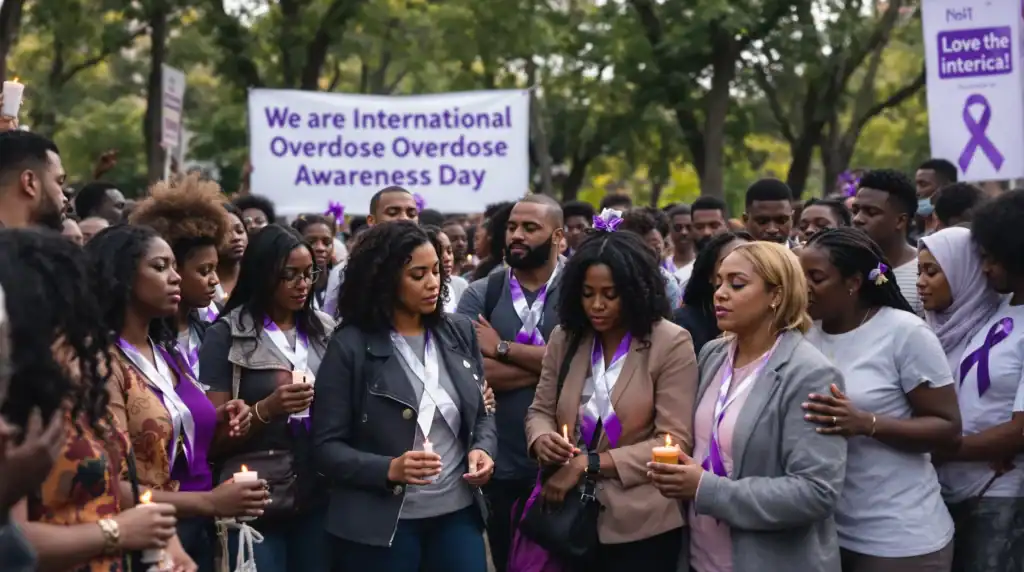
Every year on August 31st, millions of people around the world pause to remember those who have died from overdose and raise awareness about the risks of substance use. You might not know that this single day—International Overdose Awareness Day—has grown into the largest global event dedicated to ending overdose deaths and the crushing stigma that often prevents people from seeking help.
What makes this day truly powerful isn’t just the awareness it raises, but the conversations it sparks about recovery, hope, and the simple truth that addiction is a medical condition deserving of compassion, not judgment.
What is International Overdose Awareness Day?
International Overdose Awareness Day is the world’s largest annual campaign dedicated to helping people worldwide work together to end overdose and reduce stigma. Each year on August 31, people across the globe come together to confront one of today’s most urgent public health challenges.
The campaign serves three central purposes that directly affect millions of families and individuals. It provides space to remember loved ones lost to overdose and to acknowledge the profound grief felt by friends left behind. It encourages open dialogue about recovery and healing, creating opportunities for conversations that might otherwise remain unspoken. And it promotes collective action to prevent overdose, advancing the recognition of addiction as a medical condition rather than a moral failing.
The theme for 2025, “One Big Family, Driven by Hope,” emphasizes compassion, unity, and shared responsibility in saving lives and supporting recovery. Participants are invited to engage through meaningful activities such as:
- Attending local memorial events and awareness gatherings
- Supporting evidence-based prevention and harm reduction practices in your community
- Sharing educational resources about overdose recognition and response
- Advocating for expanded access to treatment and recovery services
International Overdose Awareness Day 2025 seeks to transform loss into prevention and solidarity. By honoring those who have died, supporting those in recovery, and promoting compassionate public health responses, the campaign turns remembrance into action.
Understanding the overdose crisis
The overdose crisis remains one of the leading public health challenges facing the country today. Families across the United States continue to feel the impact of every drug overdose, whether from opioids, stimulants, alcohol, or other drugs. Understanding which substances are most often involved is critical for shaping effective overdose prevention strategies that can help reduce deaths and expand access to care.
Organizations like the Penington Institute remind us that overdose is a preventable tragedy, and that every life saved matters. By focusing on education, treatment, and community support, we can create opportunities for patients to take their first day toward better health and recovery. Recognizing warning signs—such as respiratory failure or seizures during an opioid or heroin overdose—can also mean the difference between someone who survives and someone who has died.
To truly end overdose, people across the nation must commit to evidence-based care and take action today to expand access to treatment, support harm reduction efforts, and continue raising awareness across the nation.
Statistics and impact in the United States
In 2024, an estimated 80,391 Americans died from drug overdoses, marking a 27 percent decline from the record high of 2023.This was the sharpest single-year decrease ever recorded and brought national overdose deaths to their lowest level since 2019. The decline was widespread, with states such as West Virginia reporting a 43 percent drop, while others, including Hawaii, experienced more modest decreases. Despite this progress, the overall toll of fatal overdoses remains severe.
Opioids continued to drive the majority of overdose fatalities. Deaths involving opioids fell from about 83,000 in 2023 to 54,743 in 2024. Within this group, synthetic opioids such as fentanyl were involved in nearly 48,500 deaths, representing a 36 percent reduction from the previous year. While these decreases are encouraging, they still account for tens of thousands of people who died.
Disparities remain a significant concern. American Indian and Alaska Native communities continued to experience some of the nation’s highest overdose death rates, following a 15 percent increase between 2021 and 2022 that brought rates to more than 65 deaths per 100,000 people. Experts caution that these communities may not benefit equally from the national decline in overdose deaths, making targeted prevention approaches essential.
Overdose symptoms and signs
Recognizing opioid overdose symptoms quickly can mean the difference between life and death for someone you care about. Every second counts when identifying these critical warning signs that indicate a person’s body can’t handle the amount of substances they’ve consumed.
Physical symptoms appear rapidly during an overdose emergency. Your loved one’s face becomes pale and clammy while their skin takes on a bluish or purple tint, particularly around the lips and fingernails. Their body goes limp and unresponsive, making it impossible to wake them or get them to speak.
Critical warning signs include:
- Pale, clammy skin texture
- Blue or purple discoloration around the mouth and fingertips
- Complete unresponsiveness to voice or touch
- Absent or extremely slow breathing patterns
- Weak or undetectable pulse
- Vomiting or gurgling respiratory sounds
How International Overdose Awareness Day is observed
International Overdose Awareness Day unites communities worldwide through meaningful commemorative activities and symbolic gestures. These observances honor lives lost while promoting evidence-based prevention strategies.
Commemorative activities and events
Communities organize memorial gatherings to remember individuals lost to overdose throughout the year. These events create space for families and friends to share memories and support one another through collective grief.
Educational workshops provide essential information about overdose recognition, prevention strategies, and available treatment resources. Healthcare organizations, advocacy groups, and harm reduction organizations host these sessions to reduce stigma and promote understanding of substance use disorders as medical conditions.
Public awareness campaigns reach broader audiences through social media initiatives, community discussions, and outreach programs. These campaigns emphasize evidence-based solutions, work to raise awareness, and encourage conversations about recovery and hope.
The silver chain symbol and purple ribbon
The silver ribbon and purple ribbon serve as official symbols of International Overdose Awareness Day, representing remembrance and solidarity with affected families and communities. The silver color symbolizes mourning for lives lost while representing hope for prevention and recovery.
Purple signifies awareness and compassion, encouraging communities to approach substance use with understanding rather than judgment. These ribbons create visible displays of support during memorial events and awareness campaigns.
The campaign’s slogan “Time to remember. Time to act” reinforces the dual purpose of honoring those lost while taking proactive steps toward prevention. Communities display these symbols at memorial services, educational events, and public awareness activities.
What you can do to support those affected by drug overdose death
Your actions matter in the fight against overdose deaths. Every person can contribute to International Overdose Awareness Day’s mission through meaningful participation that helps save lives and reduces stigma.
Attend local events and gatherings
- Memorial walks honoring those lost to overdose
- Educational workshops on overdose recognition and response
- Community support meetings for affected families
- Advocacy rallies promoting policy reform
Learn lifesaving skills and share knowledge
- Complete naloxone training to temporarily reverse opioid overdoses and save lives
- Distribute harm reduction resources in your community
- Share overdose recognition signs with friends and coworkers
- Advocate for naloxone availability in workplaces and schools
Take direct action in your community
- Sign petitions supporting evidence-based treatment policies
- Write to local representatives about overdose prevention funding
- Volunteer with organizations providing substance use support
- Donate to naloxone distribution programs
Combat stigma through compassionate language
- Use person-first language like “person with substance use disorder” instead of “addict”
- Share recovery stories that highlight hope and healing
- Challenge stereotypes about addiction in conversations
- Support families grieving drug overdose-related losses
Get help for opioid misuse
Recovery begins with a single step, and no one has to take that step alone. International Overdose Awareness Day 2025 is a reminder that effective, evidence-based treatment is available for opioid misuse. Despite this, in 2024 an estimated 80.7% of people aged 12 or older who need care still do not receive it.
Medication-assisted treatment (MAT) is the most effective foundation for recovery. These medications help stabilize patients by reducing cravings and withdrawal symptoms. Research shows that combining medications such as methadone or buprenorphine with counseling and behavioral therapy significantly improves long-term recovery outcomes. Systematic reviews report treatment retention rates ranging from 37% to 91% at 12 months, far higher than outcomes without medication-based approaches. Methadone, in particular, is associated with stronger retention than buprenorphine, while both substantially reduce opioid use.
Harm reduction services provide immediate, evidence-based support for people at risk of overdose. Communities that implement naloxone distribution and overdose education programs have demonstrated 27% to 46% lower opioid overdose death rates compared to those without such programs. Additional strategies, including syringe services programs and the use of fentanyl test strips, reduce the risk of infectious disease transmission and help people identify dangerous drug supplies. These interventions also create critical connections to treatment for individuals who may not yet be ready for abstinence-based care.
Recovery is possible, and seeking help reflects courage, not weakness. Every person who engages in treatment and support programs strengthens the broader effort to end overdose.
Sources
- Substance Abuse and Mental Health Services Administration. (2018). Medications for opioid use disorder: Treatment Improvement Protocol 63 (TIP 63). https://www.ncbi.nlm.nih.gov/books/NBK541393/
- Timko, C., Schultz, N. R., Cucciare, M. A., Vittorio, L., & Garrison-Diehn, C. (2016). Retention in medication-assisted treatment for opiate dependence: A systematic review. Journal of Addictive Diseases, 35(1), 22–35. https://pmc.ncbi.nlm.nih.gov/articles/PMC6542472/
- Substance Abuse and Mental Health Services Administration. (2023). Counseling approaches to promote recovery from problem substance use and related issues (Treatment Improvement Protocol 65). https://www.ncbi.nlm.nih.gov/books/NBK601490/
- Substance Abuse and Mental Health Services Administration. (2025). Overdose prevention and response toolkit. https://library.samhsa.gov/product/overdose-prevention-response-toolkit/pep23-03-00-001
- Penington Institute. (2024). International Overdose Awareness Day. https://www.overdoseday.com/
- Centers for Disease Control and Prevention. (2025). Provisional drug overdose death counts. National Center for Health Statistics. https://www.cdc.gov/nchs/nvss/vsrr/drug-overdose-data.htm
- National Institute on Drug Abuse. (2025). Overdose death rates. https://nida.nih.gov/research-topics/trends-statistics/overdose-death-rates
- National Institute on Drug Abuse. (2023). Treatment approaches for drug addiction. https://nida.nih.gov/publications/drugfacts/treatment-approaches-drug-addiction
- World Health Organization. (2014). Community management of opioid overdose. https://www.who.int/publications/i/item/9789241548816
- Substance Abuse and Mental Health Services Administration. (2025). Key substance use and mental health indicators in the United States: Results from the 2024 National Survey on Drug Use and Health (HHS Publication No. PEP25-07-007, NSDUH Series H-60). Center for Behavioral Health Statistics and Quality, SAMHSA, U.S. Department of Health and Human Services. https://www.samhsa.gov/data/sites/default/files/reports/rpt56287/2024-nsduh-annual-national-report.pdf