

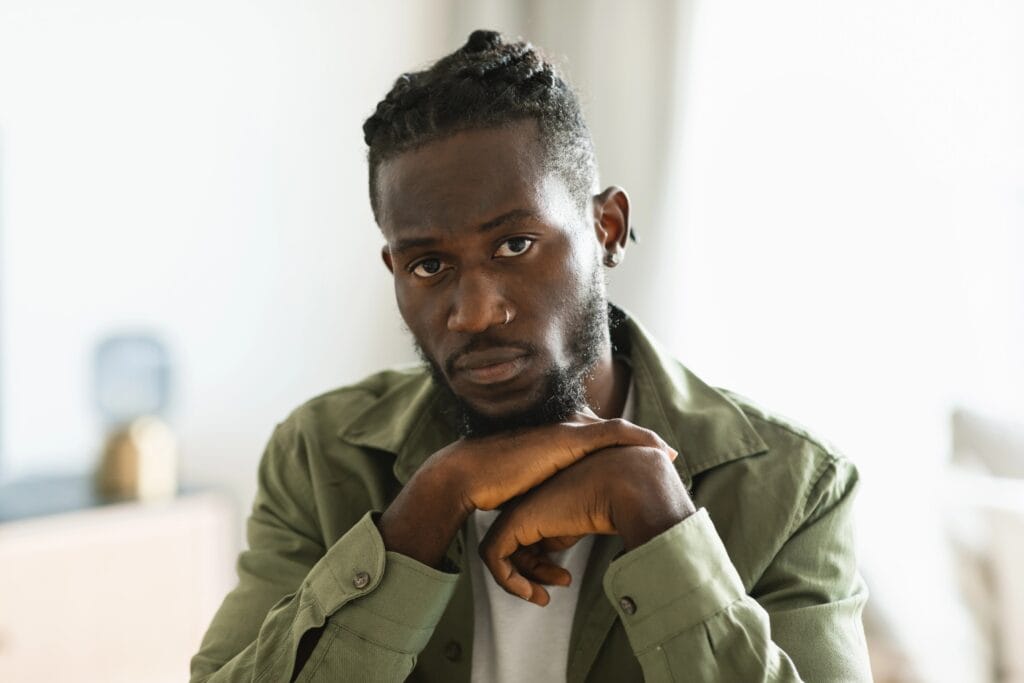
There’s a conversation that has been happening in whispers for far too long, and it’s time to bring it into the light. We need to talk about mental health and black men. It’s a topic layered with strength, struggle, systemic barriers, and a quiet resilience that deserves to be seen and supported. If you’re here, you might be feeling the weight of it all, either for yourself or for someone you love. You might be wondering why it feels so hard to reach out, or where to even begin. Please know, you’re not alone in this feeling, and taking this step to understand is an act of profound strength.
Mental health statistics and realities among black men
To truly grasp the situation, it helps to look at the numbers, because they tell a story of profound disparities. While mental health challenges don’t discriminate, access to care and outcomes certainly do. For instance, studies show that only about 26.4% of black men who experience daily symptoms of depression or anxiety seek out mental health services. Compare that to 45.4% of non-hispanic white men, and a clear gap emerges. This isn’t about a lack of need; it’s about a complex web of barriers that stand in the way.
The consequences of this gap are heartbreakingly severe. According to the U.S. Department of Health and Human Services Office of Minority Health, suicide was a leading cause of death for African Americans ages 15 to 24 in recent years. The statistics paint an even starker picture within the black community, revealing that black men are nearly four times more likely to die by suicide than black women. Even more alarming is the trend among young people; the suicide rate for black boys has seen a staggering 60 percent increase over the last two decades. These numbers aren’t just statistics; they represent lives, families, and communities impacted by a crisis that we can no longer afford to ignore. They underscore a critical need for better, more accessible, and more culturally attuned mental health care.
Trauma exposure and mental health disorders
When we talk about trauma, it’s important to understand it in the full context of the black male experience. It’s not just about a single event. It’s often a constant, cumulative weight. This includes exposure to community violence, but it also encompasses the daily stress of systemic racism and navigating a world that often feels hostile. The average number of traumas reported by black men is a staggering 7.4, a figure that speaks to a lifetime of shouldering heavy burdens.
This prolonged exposure has a direct and measurable impact on mental well-being. It creates a direct line to conditions like post-traumatic stress disorder (PTSD), depression, anxiety, and substance use. Research shows that among black men, rates of PTSD range from 12-22%, while depression affects 15-28%. Often, these conditions don’t exist in isolation.
Many men find themselves dealing with co-occurring disorders, where one condition feeds the other. For example, about 23-31% of black men with PTSD also have a major depressive disorder, and around 22% struggle with a co-occurring alcohol or substance use disorder, often as a way to cope with the underlying pain. Despite these high rates, a significant service gap remains. It’s estimated that 56-74% of black men exposed to traumatic events have an unmet need for mental health services, leaving too many to navigate their healing journey alone.
Racism and discrimination
It’s impossible to discuss trauma without talking about racism. For many black men, racism isn’t an abstract concept; it’s a chronic stressor woven into the fabric of daily life. This is often referred to as racial trauma. It’s the mental and emotional injury caused by encounters with racial bias, from subtle microaggressions to overt acts of discrimination.
This relentless pressure keeps the body and mind in a heightened state of alert, or hypervigilance. Over time, this chronic stress can lead to persistent anxiety, irritability, and a feeling of being emotionally drained. It’s a unique and heavy burden that directly impacts mental health, yet it’s often overlooked or misunderstood in clinical settings. Acknowledging racial trauma is a critical first step toward providing care that truly sees and supports the whole person.
Cultural mistrust of health care providers
For many black men, walking into a doctor’s office or a therapist’s room comes with a shield of caution. This isn’t just a feeling; it’s a deep-seated cultural mistrust born from a painful history and present-day realities. Historical events, like the infamous Tuskegee experiment where black men were unethically denied treatment for syphilis, have left a long and damaging legacy. These are not just stories from the past; they are foundational events that have fostered a legitimate fear and skepticism of the healthcare system.
A stark lack of representation in the mental health field compounds this mistrust. In the United States, African Americans make up only 2% of psychiatrists, 2% of psychologists, and 4% of social workers. When you don’t see providers who look like you or share your lived experience, it’s natural to question whether you’ll be truly understood.
This gap can make it feel impossible to open up about sensitive issues like racial trauma or the unique pressures of black masculinity. The societal stigma that already surrounds mental health becomes even heavier when combined with these valid concerns, creating a formidable barrier to seeking and receiving effective care. Many men feel it’s safer to stay silent than to risk being misunderstood or judged by a system that hasn’t always had their best interests at heart, and that is a reality we must address when talking about the path to addiction and mental health treatment.
Misdiagnosis and clinician bias
The lack of cultural understanding within the healthcare system can have devastating consequences, one of the most serious being misdiagnosis. The ways different cultures express emotional distress can vary, and what might be a sign of depression or trauma in a black man can be misinterpreted by a clinician without the proper cultural context. For example, guardedness or a reluctance to trust —a reasonable response to a lifetime of discrimination —might be mislabeled as paranoia. Similarly, symptoms of trauma-related anger or frustration may be seen as aggression rather than a cry for help.
This leads to alarming trends, such as the one highlighted in a Rutgers study finding that African Americans are more frequently misdiagnosed with schizophrenia when their symptoms are actually indicative of severe depression. Unconscious bias can shape a clinician’s perception, leading them to overemphasize certain symptoms while downplaying others. This not only results in inappropriate and ineffective treatment but also deepens the sense of mistrust. When you feel unseen and misunderstood, the last thing you want to do is continue to seek help from that same system.
Frequently asked questions
Black men often face a unique combination of challenges that deeply impact their mental health. These include the constant stress of navigating systemic racism and discrimination, which can lead to what is known as racial trauma. There is also a significant lack of representation in the mental health field, making it difficult to find providers who understand their lived experiences.
Societal pressures to appear strong and self-reliant can create a barrier to showing vulnerability or seeking help. This combination of external prejudice and internal expectations makes the path to getting effective care particularly difficult for many black males.
Several significant factors contribute to lower rates of seeking mental health treatment among black men. A deep-seated cultural mistrust of the healthcare system, rooted in historical injustices and ongoing clinician bias, is a primary barrier. Many fear being misunderstood or misdiagnosed by providers who lack cultural competency.
Additionally, societal and cultural stigma can make it feel like a sign of weakness to ask for help. Practical issues, such as the cost of care and the difficulty of finding black mental health professionals, also play a major role in preventing men from accessing the services they need.
Yes, depression in black men can show up in ways that differ from the “classic” signs of sadness. Instead of expressing feelings of hopelessness, some men may display increased irritability, frustration, or anger. It’s also common for emotional pain to manifest as physical symptoms, like chronic headaches, digestive issues, or unexplained pain.
Other potential signs include changes in sleep or appetite, loss of interest in hobbies, and increased substance use as a way to cope with internal distress. Recognizing these varied symptoms is a crucial step in getting the right support for your health.
Finding the right therapist is key, and there are resources to help. You can start with online directories specifically for the black community, such as Black Men Heal. National directories like Psychology Today also allow you to filter providers by ethnicity and specialty.
When you contact potential clinicians, don’t hesitate to ask about their experience working with black men and their approach to topics like systemic racism. A good therapist will welcome these questions and be open about their ability to provide culturally competent care and therapy.
The black church and other community networks have long been pillars of strength and support. For many, they are the first line of defense, offering a sense of belonging and a safe space to discuss life’s struggles without judgment. Trusted places like barbershops and faith-based organizations often serve as informal counseling centers.
These informal support networks play a vital role in reducing the stigma around mental health. By normalizing conversations about well-being, they can act as a crucial bridge, encouraging individuals to seek professional therapy when needed.
Helping black men and boys gain optimal mental health
The path to mental wellness for black men and boys is layered with unique challenges, from the heavy weight of trauma and systemic racism to a healthcare system that has often failed to provide culturally competent care. Yet, within the community lies immense strength, in the bonds of family and friendship, in trusted spaces like barbershops, and in a deep-seated resilience. While the statistics can feel daunting, they don’t have the final say.
Reaching out for support is not a sign of weakness; it’s a sign of strength. It is a courageous act of self-preservation, an investment in your own well-being that sends ripples of strength through your family and your community. It’s about reclaiming your narrative and choosing a future defined by hope, not hurt. Taking that first step can feel like the hardest part, but you don’t have to walk this path alone. You can start by simply living one day at a time and making one small, healthy choice today.
If you’re ready to explore what compassionate, collaborative care looks like, our team at Red Ribbon Recovery Indiana is here to listen without judgment. Call us at (317) 707-9848 or contact us to begin the conversation. Your journey to healing is worth it.
Sources
- Office of Minority Health. (January 1, 2024). Mental and Behavioral Health in Black/African Americans. U.S. Department of Health and Human Services. https://minorityhealth.hhs.gov/mental-and-behavioral-health-blackafrican-americans
- Centers for Disease Control and Prevention. (September 18, 2025). Notes from the Field: Differences in Suicide Rates, by Race and Ethnicity – CDC. https://www.cdc.gov/mmwr/volumes/74/wr/mm7435a2.htm
- National Center for PTSD. (August 5, 2018). Substance Use and PTSD – PTSD: National Center for PTSD. U.S. Department of Veterans Affairs. https://www.ptsd.va.gov/understand/related/substance_misuse.asp
- Washington University in St. Louis. (September 4, 2019). Black males, trauma, and mental health service Use: A systematic review. Open Scholarship Repository. https://openscholarship.wustl.edu/brown_facpubs/61/
- Rutgers University. (March 21, 2019). African Americans More Likely to Be Misdiagnosed with Schizophrenia, Rutgers Study Finds. https://www.rutgers.edu/news/african-americans-more-likely-be-misdiagnosed-schizophrenia-rutgers-study-finds
- Centers for Disease Control and Prevention. (September 4, 2024). About The Untreated Syphilis Study at Tuskegee – CDC. https://www.cdc.gov/tuskegee/about/index.html
- National Center for Biotechnology Information. (January 1, 1999). Use of Professional and Informal Support by Black Men with Mental Disorders. https://pmc.ncbi.nlm.nih.gov/articles/PMC3113612/
- Substance Abuse and Mental Health Services Administration. (January 8, 2025). Evidence-Based Practices Resource Center – SAMHSA. https://www.samhsa.gov/libraries/evidence-based-practices-resource-center
- National Center for Biotechnology Information. (June 3, 2020). Integrating Mental Health and Addiction Treatment into General Medical Care. https://pmc.ncbi.nlm.nih.gov/articles/PMC7606646/
- Philadelphia College of Osteopathic Medicine. The Effects of Acknowledging Cultural Differences on Therapeutic Alliance. Digital Commons @ PCOM. https://digitalcommons.pcom.edu/cgi/viewcontent.cgi?article=1306&context=psychology_dissertations