

Substance abuse among Indigenous Americans remains one of the most pressing public health concerns in the country, with Native American youth facing some of the highest rates of substance use disorder across all ethnic groups. Research findings consistently show that historical trauma, poverty, and limited access to culturally informed addiction treatment contribute to outcomes that far exceed those of the general population. Real hope begins with understanding these deeper roots, and there are respectful, meaningful ways forward for those seeking recovery and connection.
Alcohol and drug addiction treatment for Native American youth
Native American communities carry a history of systemic disadvantage that directly shapes current substance use patterns among American Indian youth. Factors such as historical trauma, economic instability, and the erosion of cultural identity all contribute to increased risk for alcohol use disorder and illicit drug use. Evidence-based substance abuse prevention programs tailored to native cultures produce far better outcomes than generalized approaches. Addiction treatment that acknowledges these intersecting factors gives Native American youth a real path toward lasting recovery.
Alcohol and drug use among Native Americans
The numbers can be hard to look at, but they are the first step toward understanding the reality of substance use in Native American communities. According to data from the Substance Abuse and Mental Health Services Administration (SAMHSA), Indigenous peoples in the U.S. have the highest rates of substance use disorders compared to all other ethnic groups.
The statistics reveal specific challenges related to alcohol and illicit drug use, but they also point to a significant gap between those who need help and those who actually receive it.
- Substance use disorders. Roughly 10% of Native Americans have a substance use disorder, a rate higher than the national average.
- Alcohol use disorder. About 7.1% of Native Americans struggle with an alcohol use disorder. This is often linked to high rates of binge drinking, with nearly 25% reporting binge drinking in the past month.
- Illicit drug use. While specific numbers can vary, Native Americans consistently report higher rates of illicit drug use, including marijuana, opioids, and methamphetamines.
- The treatment gap. This is perhaps the most critical statistic of all. While an estimated 13% of Native Americans need substance use treatment, only about 3.5% ever receive it. This gap is caused by many barriers, from geographic isolation and lack of insurance to a deep-seated mistrust of healthcare systems that have historically failed them.
Historical trauma
To understand substance use in Indigenous communities, we have to look far beyond the individual. We have to look back at a history filled with loss, violence, and systematic attempts to erase entire cultures. This is the root of historical trauma, a concept that explains how the collective, multigenerational pain of a people continues to affect their descendants today.
Risk factors
Historical trauma lays the groundwork for many of the challenges Indigenous communities face today, creating a set of present-day risk factors that can make people more vulnerable to addiction. These aren’t personal failings but are the direct result of systemic issues that have persisted for generations.
Poverty and environment
Many Native American communities, particularly those on reservations, face significant socioeconomic disparities. High rates of unemployment, inadequate education, and limited economic opportunities create an environment of chronic stress and hopelessness.
When basic needs are a constant struggle, it’s understandable that some may turn to substances as a way to cope with the daily pressures of poverty. This is compounded by geographic isolation, which can limit access to healthy food, stable jobs, and quality healthcare, making it even harder to find a way out of the cycle of addiction. A family history of substance abuse can also be a significant risk factor, as environmental stress and learned behaviors are passed down.
Discrimination
Living with the constant weight of racial discrimination adds another layer of chronic stress that can fuel substance use. For many Native Americans, experiencing acts of racism is a daily reality.
This constant exposure to prejudice, whether in healthcare, education, or employment, can lead to feelings of anger, shame, and helplessness. Over time, this erodes mental and emotional well-being.
Mental health
There is a strong link between trauma, mental health, and addiction. In Native American communities, the prevalence of co-occurring disorders is incredibly high. PTSD, for example, affects some Indigenous populations at a rate as high as 21.9%, often stemming from historical trauma and high rates of violence. Many people also struggle with anxiety and depression.
When mental health conditions go untreated, individuals often try to manage their symptoms on their own, a practice known as self-medication. Alcohol or drugs might temporarily quiet anxious thoughts or lift the heaviness of depression, but this only masks the underlying issue and often leads to a dual diagnosis, where a substance use disorder and a mental health disorder exist at the same time.
AIAN protective factors for substance use disorders
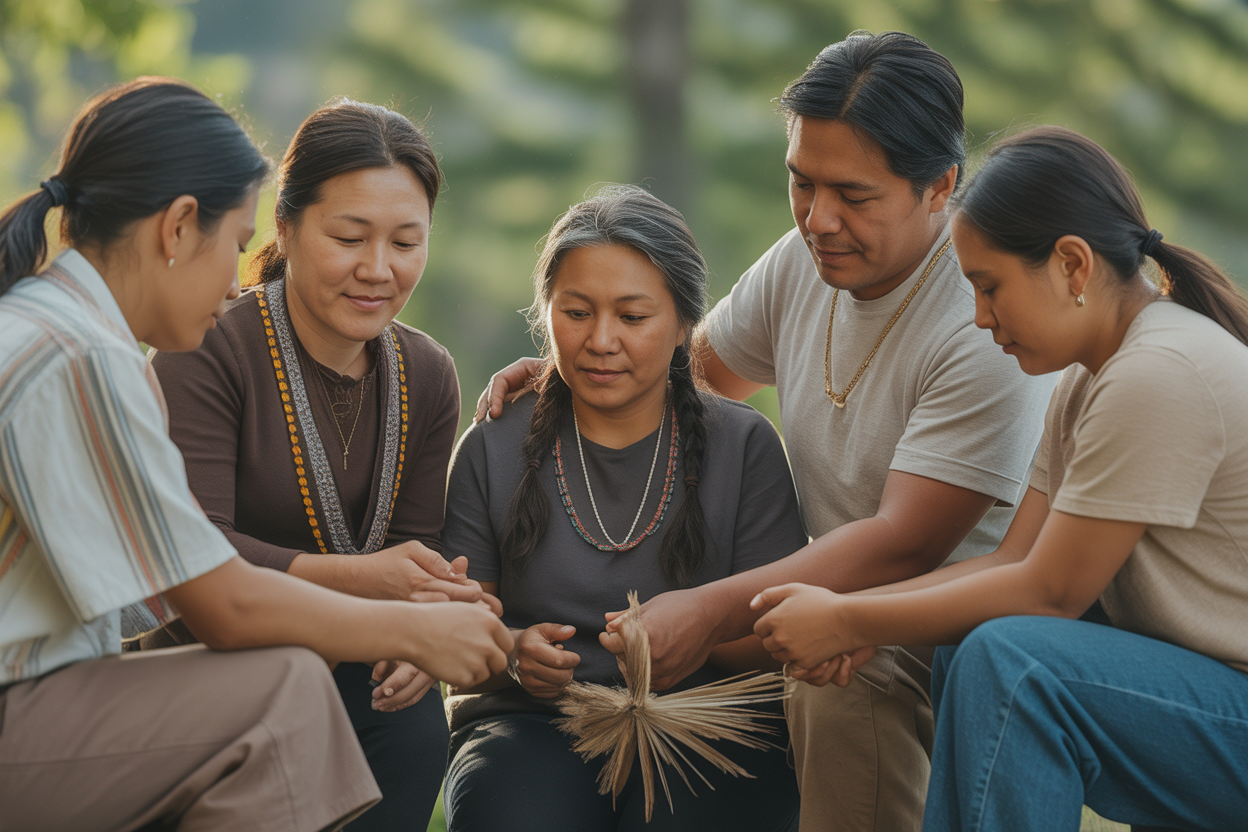
While it’s crucial to understand the risk factors, it is just as important to recognize the incredible resilience and strength within Indigenous communities. For generations, cultural traditions, strong family bonds, and spiritual practices have served as powerful protective factors, shielding individuals from the worst effects of trauma and addiction.
- Strong ethnic identity. Feeling a deep connection to one’s culture, history, and heritage provides a powerful sense of belonging and self-worth. It acts as an anchor in difficult times.
- Family bonds. Close-knit family relationships and strong community support systems create a safety net, ensuring that no one has to face their struggles alone.
- Community support. Active involvement in community life fosters a sense of collective responsibility and shared purpose, reducing feelings of isolation.
- Traditional spiritual practices. Engaging in ceremonies, storytelling, and other traditional practices connects individuals to something larger than themselves, offering guidance, meaning, and a path to healing.
Treatment considerations
For treatment to be truly effective, it must be culturally attuned. This means it must respect and incorporate the values, traditions, and beliefs that are central to Indigenous life.
For Native American youth and families managing substance use disorder, outpatient care offers structured treatment without requiring an overnight stay. Our outpatient rehab Indiana program provides individual counseling, group sessions, and education that address both drug use and underlying behavioral health needs.
Intensive outpatient program (IOP)
The IOP Indiana program provides a more structured schedule for those whose substance dependence requires closer attention without a residential stay. Sessions meet multiple times per week and incorporate evidence-based substance abuse approaches shown in research to reduce addictive behaviors among native American communities. IOP is a strong fit for native youth who benefit from consistent therapeutic contact while still living at home.
Partial hospitalization program (PHP)
PHP Indiana offers the highest level of outpatient care available and is designed for individuals with more complex substance use disorder needs. Programming runs for several hours daily and addresses co-occurring mental health conditions that frequently accompany drug abuse and alcohol use disorder among American Indian people. For those who need detox or inpatient stabilization before starting PHP, we recommend connecting with a trusted partner facility to ensure a safe transition into treatment.
Dual diagnosis treatment
Many Native American youth living with substance use also carry unaddressed mental health conditions rooted in historical trauma, violence, and poverty. Our dual diagnosis treatment centers in Indiana program treats both addiction and co-occurring disorders at the same time, rather than addressing them separately. This integrated approach leads to stronger, more lasting outcomes for individuals from Native American communities and other ethnic groups with complex needs.
Telehealth
Telehealth mental health services remove geographic and transportation barriers that often prevent Native American youth and families from accessing consistent care. Virtual sessions cover substance abuse counseling, mental health therapy, and medication management for eligible clients. This option is especially valuable for those in rural areas where in-person treatment programs may not be accessible.
Cognitive behavioral therapy (CBT)
Cognitive behavioral therapy is one of the most well-supported evidence based substance abuse interventions available, with decades of research findings confirming its effectiveness across diverse populations. CBT helps native youth identify the thought patterns and beliefs that drive drug use and addictive behaviors, then build practical skills to change them.
Dialectical behavior therapy (DBT)
DBT therapy was developed to treat individuals who struggle with intense emotional responses, which often accompany substance use disorder and historical trauma. For American Indian youth who have experienced violence, poverty, or the loss of cultural connection, DBT provides tools to regulate emotion, tolerate distress, and improve relationships within families and communities.
Family therapy
Family therapy recognizes that recovery from drug abuse does not happen in isolation, especially within Native American communities where family and extended community bonds are central to culture and identity. Sessions work to repair communication, address the impact of substance dependence on the family unit, and build a home environment that supports long-term sobriety.
The importance of cultural consideration in substance abuse addiction
Native American youth and their families deserve addiction care that takes history, culture, and community seriously, not a one-size-fits-all approach that ignores the factors driving substance abuse among Indigenous Americans. Help is available to all cultures and backgrounds.
Red Ribbon Recovery Indiana is here to help guide the way, with treatment programs built on evidence, compassion, and respect for the people we serve. To learn more or get started today, contact us or call us directly at (317) 707-9848. You can also read reviews and find our location on our Google page. Help is available now, and you do not have to wait to take the first step.
Sources
- SAMHSA. (July 28, 2025). SAMHSA releases annual national survey on drug use and health. SAMHSA. https://www.samhsa.gov/newsroom/press-announcements/20250728/samhsa-releases-annual-national-survey-on-drug-use-and-health
- SAMHSA. (n.d.). Among the American Indian or Alaska Native (AIAN) population: 2023 National Survey on Drug Use and Health. SAMHSA. https://www.samhsa.gov/data/sites/default/files/reports/rpt53159/2023-nsduh-pop-slides-aian.pdf
- Indian Health Service. (2013). Behavioral health. Indian Health Service. https://www.ihs.gov/newsroom/factsheets/behavioralhealth/
- SAMHSA. (n.d.). Results from the 2021 National Survey on Drug Use and Health: Detailed tables. SAMHSA. https://www.samhsa.gov/data/sites/default/files/reports/rpt39443/2021NSDUHFFRRev010323.pdf
- Indian Health Service. (2013). Disparities. Indian Health Service. https://www.ihs.gov/newsroom/factsheets/disparities/
- SAMHSA. (October 11, 2024). Cultural factors that protect against substance misuse and promote mental health among American Indian and Alaska Native youth. SAMHSA. https://www.samhsa.gov/resource/sptac/cultural-factors-protect-against-substance-misuse-promote-mental-health-american
- Indian Health Service. (October 11, 2024). Protective factors. Indian Health Service. https://www.ihs.gov/asab/familyfriends/protectivefactors/
- SAMHSA. (February 19, 2019). TIP 61: Behavioral health services for American Indians and Alaska Natives. SAMHSA. https://library.samhsa.gov/product/tip-61-behavioral-health-services-american-indians-and-alaska-natives/sma18-5070
- SAMHSA. (n.d.). National tribal behavioral health agenda. SAMHSA. https://www.samhsa.gov/communities/tribal-affairs/national-tribal-behavioral-health-agenda

