
When addiction looms large in your everyday life and the places you know, the idea of leaving Indiana for treatment can feel both necessary and daunting. Many people struggling with opioid or meth use want a real chance to break free from old patterns, and distancing yourself from local triggers is a powerful draw. Deciding whether rehab out of state is right means looking beyond just the location, it is about understanding what kind of care, support, and financial plan will actually help you maintain lasting recovery. Knowing your options helps you make the choice that fits you or your loved one best.

Why do people choose to travel for rehab?
When you face a substance use disorder, your current environment can feel overwhelming. People, places, and routines can act as constant triggers. This is a common reason why someone might consider rehab out of state. According to the National Center for Biotechnology Information, creating physical distance provides a much-needed clean slate. It separates you from the negative influences that drive your addiction and offers invaluable time to focus on your personal healing.
The case for distance
When you step away from home, you find fewer daily distractions. You have more time for deep soul-searching and personal growth. This is a core part of the recovery process. A new setting can greatly improve your chances for early relapse prevention. Comprehensive addiction treatment, whether local or distant, then takes that fresh start and turns it into structured clinical progress.
What distance can and cannot do
Removing someone from high-risk environments improves treatment engagement for many people. Your brain needs a quiet space to reset from active addiction. However, leaving the Midwest for treatment is not a magic cure. True healing still requires a deep, unwavering internal commitment.
Moving away might temporarily stop the physical act of using substances, but you must still do the hard emotional work of recovery. A practical, grounded mindset is essential for lasting change. It is completely valid to want to leave your hometown behind. Many Hoosiers feel this way when they begin seeking help. You simply need to bring your true dedication with you.
The pros and cons of out-of-state rehab
Deciding to leave home for rehab out of state is a major choice. It is important to weigh both sides of the coin carefully. You must consider how a new location will impact your healing while thinking about your lifestyle and family responsibilities. Distance can be a double-edged sword. It brings distinct benefits, but it also creates unique logistical hurdles.
Advantages of out-of-state rehab
Leaving your home state offers a very high level of privacy. You will not have to worry about running into your neighbors. This confidentiality can make it easier to open up in therapy. A distant facility separates you from local substance networks. This physical separation is vital for early relapse prevention. It forces a strong commitment to becoming sober in a safe space.
Many out-of-state centers provide comfortable, private rooms for their guests. They also offer specialized clinical programming. Structured environments away from familiar triggers support better treatment engagement for those whose home environment is genuinely unsafe or saturated with triggers. You can truly focus on your own mental and physical well-being while being protected from enabling relationships that might stall your progress.
Disadvantages of rehab away from home
Despite the clear benefits, an out-of-state facility presents real, frustrating challenges. First, you have to figure out how to cover massive treatment costs. Traveling adds extra expenses for flights, gas, and hotel stays. Furthermore, you will be far away from your supportive family members. Maintaining distance from loved ones can make the process feel lonely.
Family counseling sessions become much harder to arrange from another state. Your loved ones cannot easily drive to visit you on weekends. You will also face steep hurdles with your ongoing aftercare planning. A distant facility might not know the local resources back in Indiana. Setting up a local therapist or support group is tougher from afar. A lack of local connections can increase your risk of relapsing later.
You can overcome addiction. Reach out to discover:
When out-of-state rehab actually makes sense
While local care is the right choice for most Hoosiers, there are specific situations where traveling for treatment is genuinely the better option. Honest recognition of these scenarios helps you make the choice that truly fits your circumstances rather than defaulting to one approach.
When your home environment is unsafe
If your home situation is actively dangerous, whether due to domestic violence, an ongoing trafficking situation, or a household where multiple people use substances together, geographic distance can be a matter of safety, not just preference. Returning home each evening or even staying within driving distance may put your recovery and your physical well-being at serious risk.
When local relationships will sabotage your progress
For some people, the social network surrounding their substance use is so entangled with daily life that physical distance is the only way to disconnect. If your old friend group, dealer, or even close family members are unwilling to support your sobriety, traveling for treatment may give you the clean break you need.
When you need specialized care not available locally
Certain conditions or treatment needs may require highly specialized programs that are not available in Indiana. This includes rare co-occurring disorders, programs designed for specific professions like healthcare workers or pilots, or trauma-specific care for survivors of severe abuse. In these cases, traveling can connect you with expertise you cannot find at home.
When privacy is a critical professional concern
For public figures, business owners in small communities, or professionals whose careers depend on confidentiality, out-of-state rehab can offer privacy that is impossible to achieve locally. If running into a neighbor at a treatment center would prevent you from getting help at all, distance may be the factor that allows you to seek care.
When you have already tried local treatment without success
If you have completed multiple rounds of local treatment without lasting results, a completely different environment may be the change that finally creates progress. Sometimes a new setting, new clinical team, and new approach combine to break through patterns that local care has not been able to address.
Even in these cases, plan for the return
If you do choose to travel, plan your return to Indiana carefully. Identify local therapists, support groups, and outpatient programs before you discharge. Coordinate directly between your out-of-state treatment team and your future Indiana providers. The transition home is often the most dangerous phase of recovery for those who have traveled for care, so thorough planning protects everything you have built.
Free Insurance Check
Our rehab center accepts most insurance plans.
Check if your insurance will cover the cost of treatment by filling out our confidential insurance form. We accept most insurance plans.

Choosing a nearby or out-of-state rehab
Comparing an out-of-state program with a nearby facility requires careful thought. A fresh start in a new place sounds very tempting at first. However, recovery is often about returning to your own family, leaning on community values, and building practical, local support systems.
| Consideration | In-state rehab (Indiana) | Rehab out of state |
|---|---|---|
| Family support | Loved ones can easily attend therapy sessions | Distance makes family involvement difficult |
| Privacy | You may worry about local stigma | High level of confidentiality and anonymity |
| Cost and Medicaid | Covered by Indiana Medicaid for eligible residents | Rarely covered by state-funded public assistance |
| Aftercare planning | Direct connections to local peer support groups | Harder to set up local therapists and doctors |
Why local care often works best
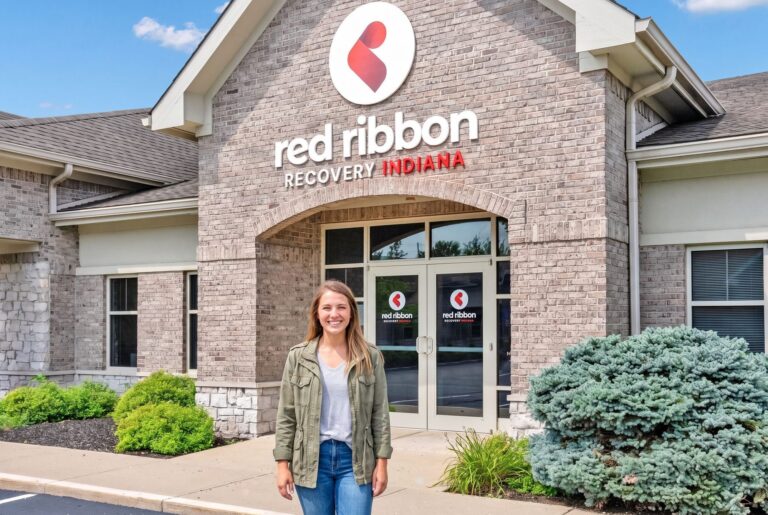
Red Ribbon Recovery Indiana serves as a strong, localized option. We deeply understand the specific challenges of our great state. The meth and opioid crises have hit Indiana towns incredibly hard. We offer a supportive, sober community right in your own backyard. You do not have to fly across the country to find excellent care.
Remaining in the state means you can build a reliable support network. Peer support is a truly powerful tool. It helps you stay grounded when times get exceptionally tough. This local connection is especially important for those with co-occurring disorders.
Continuity of care matters
For those with co-occurring conditions, consistent dual diagnosis care is vital for long-term success. Dual diagnosis treatment centers in Indiana integrate substance use care with mental health treatment through one coordinated clinical team. Local programs can seamlessly connect you with nearby therapists. This continuity of care makes your transition back into daily life much smoother. You can lean on trusted local messengers like pastors, coaches, or longtime family friends. Staying close to home builds a solid foundation for your future.
Paying for treatment: insurance coverage and Medicaid
Cost is often the biggest factor in choosing a treatment facility. You must evaluate your health insurance coverage carefully before making plans. Many people rely on state-funded public assistance programs for their recovery.
Indiana Medicaid coverage
If you live in Indiana, you might have access to Medicaid. It is crucial to know that Medicaid rarely covers care in another state. Indiana Medicaid is strictly designed to pay for local, in-state services. You usually need prior authorization for any out-of-state Medicaid exceptions. These exceptions are only granted for highly specific, severe medical situations.
Verify benefits before committing
Always verify your insurance benefits before you pack your travel bags. You might find that your treatment costs are fully covered at home. Conversely, an out-of-state program could leave you with massive out-of-pocket bills. Nobody wants to deal with financial stress while trying to get sober.
Other financial options
There are other ways to handle the financial side of recovery. You might be able to use VA benefits if you are a military veteran. Some people use COBRA to maintain their previous employer’s health insurance. The Affordable Care Act also mandates robust coverage for mental health services. Knowing your exact financial limits helps you make a safe, realistic choice.
WE ARE AVAILABLE 24/7
Request a call for answers and help.
If you or someone you care about is struggling with addiction or mental health problems, request a call to speak with a knowledgeable treatment specialist. Our team is here to help you understand your options for care. There is no cost or obligation to enter treatment by requesting a call.
"*" indicates required fields
Things to consider when choosing a rehab
You must evaluate your specific needs when looking at addiction treatment programs. Every person requires a completely unique approach to healing. Look for highly rated facilities that create customized, individualized treatment plans. A generic approach simply will not work for achieving long-term sobriety.
Accreditation and credentials
Always check a facility’s formal accreditation before you commit to attending. Organizations like The Joint Commission and CARF ensure a very high standard of care. State licensing and LegitScript certification add another layer of credibility. Reputable programs make this information easily available.
Medical detox and clinical safety
You should also consider your immediate physical health and safety requirements. Ask if they offer medically supervised detoxification on-site. A detox center Indiana program safely manages severe withdrawal, which is absolutely critical for substances like alcohol and benzodiazepines where withdrawal can be medically dangerous. Conditions like delirium tremens require immediate clinical intervention.
Specialized therapy options
Check if the facility provides specialized therapies for your specific mental health needs. The best programs offer multiple evidence-based modalities so they can match the right therapy to your situation, not just a one-size-fits-all approach.
Travel logistics and admission stress
Getting to a distant treatment setting requires very careful logistical planning. You must decide whether to make your own travel arrangements or look for facilities that offer comprehensive transportation services. Traveling while in active withdrawal can be incredibly dangerous and stressful. Local care eliminates this concern entirely by removing the travel burden during your most vulnerable moments.
There is also a third option that removes travel entirely: our virtual treatment program delivers structured care statewide, so location stops being part of the decision.
Rehab might feel like a big step, but remember why you're here—you’re looking for a way forward. We can help.
Key Takeaways
- Choosing out-of-state rehab requires weighing the benefits of a fresh start against the loss of local support.
- Local recovery options are available in the Midwest, offering practical and grounded support for substance use disorders within your community.
- Contact Red Ribbon Recovery Indiana by phone or online to explore local care options and verify insurance benefits.
Frequently asked questions
What are the benefits of attending rehab out of state?
Choosing rehab out of state can provide a fresh environment away from the people, places, and stressors that may contribute to substance use. Many individuals find that creating distance from their usual surroundings helps them focus fully on the recovery process. Out-of-state treatment may also provide access to specialized treatment programs, residential addiction treatment, and levels of care that are not available closer to home.
Will my insurance cover an out-of-state rehab center?
Many insurance plans provide coverage for addiction treatment in other states, but benefits can vary depending on the treatment facility and your specific policy. Before choosing an addiction treatment center, contact your insurance provider to verify insurance coverage, determine any out-of-pocket costs, and confirm whether the facility is in-network. Understanding your benefits ahead of time can help you make an informed treatment decision.
What can I expect when attending an out-of-state treatment facility?
While every treatment center is different, most residential treatment programs follow a structured schedule that includes individual counseling, group therapy, educational sessions, and recovery-focused activities. Depending on your needs, treatment may address substance abuse, alcohol abuse, mental health concerns, and co-occurring disorders. Many programs also provide peer support and relapse prevention planning to help clients build a strong foundation for recovery.
Is out-of-state rehab better than staying close to home?
The right treatment center depends on each person’s unique circumstances. Some individuals benefit from remaining close to family members and existing support systems, while others find that leaving their home environment reduces distractions and helps them stay focused on recovery. Factors such as treatment options, program quality, insurance coverage, and personal needs should all be considered when deciding whether out-of-state rehab is the best decision.
Can family still be involved if I attend rehab in another state?
Yes. Many rehab centers encourage family involvement through family therapy sessions, virtual meetings, phone calls, and educational programs. Family support can play an important role in the recovery journey, even when treatment takes place in another state. Maintaining healthy communication and involving loved ones in the healing process can strengthen relationships and support long-term recovery after treatment ends.
Find lasting recovery close to home
Deciding on a rehab out of state is a deeply personal choice. You must weigh the benefit of a fresh start against the loss of local support. Finding a program that fits your clinical and financial needs is the ultimate goal. If you are struggling in the Midwest, you do not have to look far for help. We offer practical, grounded support for those dealing with substance use disorders. Please call (317) 707-9848 to speak with our compassionate team today. You can also contact us online to verify your insurance benefits. Visit Red Ribbon Recovery Indiana to explore our local care options. We are ready to help you build a stable, sober life in your own community.
We are here to help you or a loved one find addiction treatment near you.
Admitting you have a substance abuse problem and asking for help is not always easy. If you or a loved one are struggling with drug addiction, alcohol addiction or another substance use disorder, help is available. You can visit SAMHSA’s National Helpline to learn about resources in your area or reach out to our team by calling (317) 707-9848 to explore personalized treatment.
Treatment center reviews
Read what treatment patients and their families have to say about their experiences at Red Ribbon Recovery Indiana.
Sources
- National Center for Biotechnology Information. (October 8, 2021). The Role of Recovery Housing During Outpatient Substance Use Treatment: A Qualitative Study. National Center for Biotechnology Information.
- National Center for Biotechnology Information. (January 15, 2013). Therapeutic Communities for Addictions: A Review of Their Effectiveness. National Center for Biotechnology Information.
- U.S. Department of Health and Human Services. (February 1, 2018). IN-Healthy-indiana-Plan-Support-2.0 SUD Implementation Protocol. Medicaid.gov.
- U.S. Government Publishing Office. (n.d.). SAMHSA Issue Brief: Important Considerations in Recovery Support Services. GovInfo.
About the content

Written by: Carli Simmonds. Carli Simmonds holds a Master of Arts in Community Health Psychology from Northeastern University. From a young age, she witnessed the challenges her community faced with substance abuse, addiction, and mental health challenges, inspiring her dedication to the field.

Medically reviewed by: Jodi Tarantino, MSW, LICSW. Jodi Tarantino is an experienced, licensed Independent Clinical Social Worker (LICSW) and Program Director with over 20 years of experience in Behavioral Healthcare. Also reviewed by the RRR Editorial team.
Red Ribbon Recovery is committed to delivering transparent, up-to-date, and medically accurate information. All content is carefully written and reviewed by experienced professionals to ensure clarity and reliability. During the editorial and medical review process, our team fact-checks information using reputable sources. Our goal is to create content that is informative, easy to understand and helpful to our visitors.
Disclaimer: This website is for informational purposes only, not medical advice. Red Ribbon Recovery Indiana connects people with the full continuum of care, including a detox center Indiana, Indiana inpatient drug rehab, PHP Indiana, IOP Indiana, and outpatient rehab Indiana.
For those managing co-occurring conditions, our dual diagnosis treatment centers in Indiana treat addiction and mental health together. We also offer telehealth mental health and online addiction treatment for flexible, remote access to care.