
The matrix model is a 16-week intensive outpatient program for stimulant and opioid addiction, built so you can keep living at home while you do the work. Jobs, children, and rent do not pause for residential care. It bundles cognitive behavioral therapy, family education, social support groups, individual counseling, and drug testing into one coordinated schedule. Research says participants stay in treatment 38 percent longer than in standard outpatient treatment.

What is the matrix model for addiction treatment?
The matrix model is a manual-guided, 16-week treatment approach commonly used within structured outpatient addiction treatment. It combines several interventions for substance use disorders within a coordinated schedule.
What is a matrix model in this context? A structured treatment sequence, not a philosophy. Every group in the matrix model curriculum follows a written guide, so participants get the same content in the same order regardless of which therapist runs the room. The model was developed to be repeatable.
Why the matrix model was developed for stimulant use disorders
The matrix model was developed in the 1980s in California, when the cocaine epidemic exposed a gap in addiction treatment. Existing 28-day inpatient programs had been developed around alcohol dependence and did not work for stimulant disorders.
People using cocaine and methamphetamine had shorter histories of continuous drug use, more intense cravings, and a binge-and-crash pattern that inpatient care was not structured to interrupt. The matrix model of addiction care answered that with outpatient intensity and relentless relapse prevention.
A 1985 pilot study found lower rates of cocaine use eight months after treatment compared with traditional programs. That result is why matrix substance use treatment spread, and why reviewers later listed it among evidence-based programs for substance abuse treatment.
Why an outpatient schedule fits Indiana
Indiana has been hit hard by both meth and opioid use, and meth addiction treatment and opioid rehab resources are thin in rural counties. An intensive outpatient schedule lets participants keep working and stay near their own support network.
Staying home is a clinical advantage, not a compromise. You practice coping skills against the actual triggers in your kitchen, your job site, and your neighborhood, instead of learning them in a facility and hoping they transfer to real life.
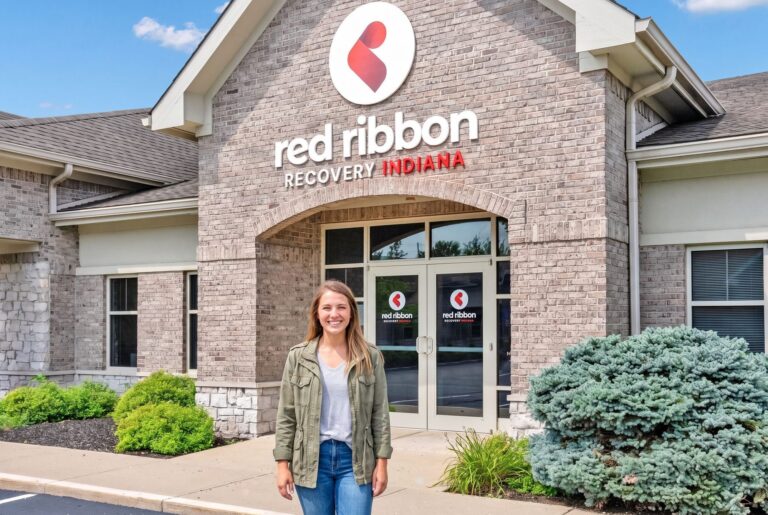
You can overcome addiction. Reach out to discover:
How does the matrix model work?
The matrix program stacks several proven treatment interventions into one schedule rather than delivering them separately. The federal evidence clearinghouse that certified the model lists relapse prevention, family education, group therapy, psychoeducation, and self-help as its required parts. Each piece of the program targets a different failure point, and no single intervention carries the whole load.
The core components of the matrix program
- Early recovery skills groups. Short, front-loaded sessions on structuring your days and interrupting cravings.
- Relapse prevention groups. The longest-running element, focused on high-risk situations and early warning signs.
- Family education. Sessions that teach loved ones how addiction changes the brain and how to support recovery without enabling it.
- Social support groups. Structured practice at building a sober network before the program ends.
- Individual counseling. Regular one-on-one sessions that adapt the curriculum to your situation.
- Urine and breath testing. Routine, scheduled, and used as evidence of progress rather than punishment.
Cognitive behavioral therapy and relapse prevention
Cognitive behavioral therapy is the spine of the matrix model curriculum. It teaches participants to catch the thought patterns that precede drug use and interrupt them before the behavior follows.
Relapse prevention groups in the program apply that skill to specific situations. Participants map their high-risk moments, build a concrete plan for cravings, and learn relapse analysis, which treats a setback as information to improve the plan rather than proof of failure.
Motivational interviewing and contingency management
Motivational interviewing runs underneath the whole program. Rather than arguing you into change, your therapist helps you name your own positive reasons to participate, which is what sustains motivation once the initial phase ends.
Contingency management adds tangible reinforcement for hitting recovery goals. Clean tests and consistent attendance earn recognition, which may sound small but works well because positive reinforcement changes behavior faster than warnings do. For example, recognizing clean tests measurably raises attendance.
Family education and rebuilding trust
Addiction damages a household, so the matrix model treats the household. Family therapy and education sessions bring loved ones in to learn the biology, set healthy boundaries, and understand what relapse risk actually looks like.
Family involvement is one of the strongest predictors of a positive long-term outcome. Open communication at home, rebuilt slowly, gives participants a positive reason to keep showing up that no clinic can manufacture.
Social support and 12-step facilitation
Social support groups inside the program pair with outside 12-step or mutual-help meetings. The goal is a network that outlasts the program, made of patients who know what early recovery feels like.
For many participants in Indiana, that network shares the same Midwestern values and the same practical pressures. Group therapy reinforces the same skills in a smaller room, and that relationship with a steady group carries real weight.
Urine and breath testing
Routine urine and breath testing can sound punitive, but it works the opposite way. It gives you and your family verifiable proof of continuous sober days, which does more for family support than any promise.
Testing also catches a slip early, while it is still a slip. That is when a treatment plan can be adjusted instead of rebuilt.
The therapist as teacher, not authority
The matrix model asks the therapist to act as a teacher and coach rather than an enforcer. That encouraging relationship is written into the manual, because shame drives people out of treatment.
Your therapist explains addiction as a disease with a biology you can understand. Understanding replaces self-blame, and self-worth starts to rebuild across the rest of your life. The relationship works because you and your therapist stay on the same page about the goal. That encouraging relationship, maintained across the whole program, is what keeps patients in treatment.
Phase 1: early recovery skills
The initial phase, right at the beginning of the program, is intense on purpose. Participants attend up to three times per week, and the focus is a drug-free routine: when you wake, where you go, who you call when a craving hits.
Frequent contact with your therapist keeps you anchored during the weeks when cravings peak. Early recovery skills groups are short and practical, and the structure itself provides a sense of security that willpower cannot.
Phase 2: relapse prevention groups
As stability holds, sessions drop to once or twice weekly and the work shifts to behavior change. Relapse prevention groups identify triggers, rehearse refusal, and repair relationships that drug use strained.
Individual counseling continues alongside the groups to track progress and adjust the plan. Participants practice each skill in real situations between sessions rather than only discussing it.
Continuing care after week 16
The core matrix program runs 16 weeks, but continuing care extends up to a year. Weekly or biweekly check-ins and social support groups protect the gains once the intensive phase ends.
Free Insurance Check
Our rehab center accepts most insurance plans.
Check if your insurance will cover the cost of treatment by filling out our confidential insurance form. We accept most insurance plans.

Goals and benefits of matrix model therapy
The stated goal of matrix model therapy is sustained abstinence from alcohol and other drug use. The benefits participants actually name are broader: steadier work, better mental health, repaired relationships, and self-worth that survives a bad week.
Matrix addiction treatment also aims at reintegration. Being a reliable parent, employee, and neighbor again matters more than a clean test, and the program is structured to produce it.
Quality of life is the honest benchmark. Patients who finish report better sleep, steadier health at work, and a positive relationship with family that survived the process. Self-worth follows those changes rather than preceding them.
Knowledge is part of the benefit too. Understanding how substance abuse rewires reward pathways gives patients a response to a craving other than shame, and that shift is what lets people participate fully in their own substance abuse treatment.
| Program phase | Session frequency | Primary clinical focus |
|---|---|---|
| Phase 1, early recovery | 3 times per week | A drug-free routine and managing early cravings. |
| Phase 2, relapse prevention | 1 to 2 times per week | Triggers, behavior change, and preventing return to use. |
| Family education | Scheduled throughout | Boundaries, communication, and rebuilding trust. |
| Continuing care | Weekly or biweekly, first year | Sober network and maintaining skills. |
What the research shows
Engagement predicts outcomes more reliably than any other variable, and the research is consistent. Participants who attend at least four to eight group sessions do measurably better, and attendance is exactly what the schedule is designed to produce.
The National Institute on Drug Abuse funded much of the early work, and the effectiveness data has held up across settings. Matrix treatment now appears on federal and state lists of evidence-based programs for substance abuse treatment.
Retention and completion rates
Research indicates participants are 38 percent more likely to stay in treatment compared with treatment as usual, and 27 percent more likely to complete it. Those numbers matter because retention is the mechanism. A treatment program someone finishes beats a stronger program they leave in week three.
OUR PROCESS
1
Get in touch
with us2
Do a free
assessment3
Review your
insurance4
Start your
addiction treatment
Start your recovery today!
(317) 707-9848Who the matrix model helps most
A clinical assessment decides whether outpatient treatment is safe and appropriate for you. Most adults with a stimulant or opioid disorder qualify for treatment, and the matrix model has been adapted for young adults as well.
People with stimulant use disorders
The matrix model was designed around stimulant recovery, so methamphetamine and cocaine fit it best. Predictable weekly structure is exactly what the binge-and-crash cycle undermines.
Opioid recovery alongside medication
Matrix therapy pairs cleanly with medication-assisted treatment. Buprenorphine or naltrexone steadies the body while the curriculum rebuilds routine, and neither substitutes for the other. Methamphetamine and opioid patients often sit in the same group.
People who cannot leave work or family
Because matrix rehab is outpatient, participants attend around a shift schedule or school pickup. That difference can mean starting treatment or postponing it indefinitely.
People with a co-occurring condition
Individual counseling leaves room to address depression, anxiety, or trauma alongside substance use. Dual diagnosis treatment centers in Indiana treat both together, because behavioral health and substance abuse belong in one treatment plan rather than two. Untreated mental health symptoms are a leading relapse driver, and participants with a diagnosis do as well as anyone once both get treatment.
WE ARE AVAILABLE 24/7
Request a call for answers and help.
If you or someone you care about is struggling with addiction or mental health problems, request a call to speak with a knowledgeable treatment specialist. Our team is here to help you understand your options for care. There is no cost or obligation to enter treatment by requesting a call.
"*" indicates required fields
How the matrix model fits into addiction treatment
The matrix model is most often associated with structured outpatient care, but it may be used within a broader treatment plan depending on substance use history, mental health needs, medical stability, and the amount of support someone requires.
The broader levels of addiction can include different levels of structure over time. Some people may need PHP Indiana before moving into IOP Indiana or outpatient rehab Indiana. Aftercare may provide additional continuity as formal treatment becomes less intensive.
How the matrix curriculum is structured
The matrix model uses a manualized format that can include group therapy, individual counseling, family education, relapse-prevention work, and routine substance testing. These components are delivered within a coordinated schedule so participants can build skills across several areas of recovery at the same time.
Because the model is outpatient, it is not designed to replace withdrawal management or residential treatment when those levels of care are medically necessary. A clinical assessment helps determine whether outpatient treatment is appropriate or whether a higher level of support should come first.
The model has been used with stimulant and opioid use disorders, including methamphetamine and cocaine-related concerns. Meth addiction treatment and opioid rehab may involve different clinical needs even when the same behavioral framework is used.
Paying for matrix model treatment in Indiana
Coverage for matrix model treatment depends on the insurance plan, the treatment setting, and the services included. Indiana Medicaid and private insurers may cover eligible addiction treatment services, but deductibles, copayments, prior authorization, and in-network requirements can vary.
Before starting treatment, it can help to confirm whether the program is in-network, which level of care is covered, and whether services such as individual counseling, group therapy, medication management, or testing require separate authorization.
Rehab might feel like a big step, but remember why you're here—you’re looking for a way forward. We can help.
Key Takeaways
- The Matrix Model is a structured, 16-week outpatient treatment program specifically developed for individuals recovering from stimulant abuse.
- This comprehensive approach combines individual therapy, group sessions, family education, and relapse prevention within a highly predictable framework.
- Its suitability depends on factors like the severity of substance use and co-occurring mental health needs, offering steady clinical support during the critical early stages of recovery.
Frequently asked questions
What happens in social support groups within the matrix model?
Social support groups help participants build sober connections, practice communication, and prepare for life after structured treatment. These groups often complement family therapy and individual therapy by creating a space to discuss recovery challenges with peers. In the Matrix Model, social support is part of a broader set of evidence-based practices designed to strengthen recovery over time.
Is the matrix model considered intensive outpatient treatment?
Yes. The Matrix Model is commonly delivered as an intensive outpatient approach, especially for stimulant use disorders. Participants can expect a structured schedule that combines relapse prevention, education, testing, counseling, and support while continuing to live at home.
How does the matrix model compare with standard outpatient treatment?
Standard outpatient treatment is usually less structured and may involve fewer weekly sessions. The Matrix Model uses a more organized form of care with manualized components, scheduled groups, individual therapy, and ongoing monitoring. That added structure can be especially useful for people who need more support without entering residential care.
What does research show about methamphetamine users?
Research following methamphetamine users for two to five years after Matrix Model treatment found that participants significantly reduced their drug use. This supports the model’s role as an evidence-based approach for stimulant recovery, especially when participants remain engaged and receive treatment delivered with appropriate training and fidelity instruments.
What should someone expect from the matrix model in the future?
The model is designed to be repeatable, so clinicians use structured materials and fidelity instruments to help maintain consistency. Participants can expect a defined sequence of recovery skills, relapse prevention, counseling, and support. Future adaptations may continue to refine how the model is delivered across different outpatient treatment settings.
Understanding matrix model treatment in Indiana
The matrix model combines structure, behavioral therapy, family education, relapse prevention, and peer support within an outpatient framework. Whether it is appropriate depends on the type and severity of substance use, co-occurring mental health needs, medical stability, and how much structure is needed during recovery. Contact us by calling (317) 707-9848 with questions about the matrix model, outpatient treatment, and addiction recovery options in Indiana. At Red Ribbon Recovery Indiana, we’re here to help you.
We are here to help you or a loved one find addiction treatment near you.
Admitting you have a substance abuse problem and asking for help is not always easy. If you or a loved one are struggling with drug addiction, alcohol addiction or another substance use disorder, help is available. You can visit SAMHSA’s National Helpline to learn about resources in your area or reach out to our team by calling (317) 707-9848 to explore personalized treatment.
Treatment center reviews
Sources
- National Institute on Drug Abuse. (2000). The matrix model of outpatient stimulant abuse treatment. Journal of Psychoactive Drugs.
- Substance Abuse and Mental Health Services Administration. (June 2014). Substance Abuse Intensive Outpatient Programs: Assessing the Evidence. Substance Abuse and Mental Health Services Administration.
- Centers for Medicare & Medicaid Services. Intensive Outpatient Program Services. Centers for Medicare & Medicaid Services.
- Substance Abuse and Mental Health Services Administration. The Matrix Model. Title IV-E Prevention Services Clearinghouse.
- National Institutes of Health. (2015). Chapter 8. Intensive Outpatient Treatment Approaches. National Institutes of Health.
- Magidson, J. F., et al. (March 2017). Documenting the implementation of the Matrix model of substance use treatment for opioid users in a South African setting. Addictive Behaviors.
- National Institutes of Health. Screen, Treat and Retain Meth-using People Who Use Opioids. ClinicalTrials.gov.
About the content

Written by: Carli Simmonds. Carli Simmonds holds a Master of Arts in Community Health Psychology from Northeastern University. From a young age, she witnessed the challenges her community faced with substance abuse, addiction, and mental health challenges, inspiring her dedication to the field.

Medically reviewed by: Jodi Tarantino, MSW, LICSW. Jodi Tarantino is an experienced, licensed Independent Clinical Social Worker (LICSW) and Program Director with over 20 years of experience in Behavioral Healthcare. Also reviewed by the RRR Editorial team.
Red Ribbon Recovery is committed to delivering transparent, up-to-date, and medically accurate information. All content is carefully written and reviewed by experienced professionals to ensure clarity and reliability. During the editorial and medical review process, our team fact-checks information using reputable sources. Our goal is to create content that is informative, easy to understand and helpful to our visitors.
Disclaimer: This website is for informational purposes only, not medical advice. Red Ribbon Recovery Indiana connects people with the full continuum of care, including a detox center Indiana, Indiana inpatient drug rehab, PHP Indiana, IOP Indiana, and outpatient rehab Indiana.
For those managing co-occurring conditions, our dual diagnosis treatment centers in Indiana treat addiction and mental health together. We also offer telehealth mental health and online addiction treatment for flexible, remote access to care.