

When someone mentions getting “an 8 ball,” they’re not talking about pool or magic tricks. They’re referring to an eighth of an ounce of cocaine—roughly 3.5 grams—a quantity that often marks the point where casual use becomes something far more serious.
If you’ve heard this term from someone you care about or are trying to understand your own relationship with substances, you’re not alone in feeling confused or concerned. The language around drugs can feel like a secret code, keeping outsiders guessing while those involved navigate an increasingly dangerous world.
Understanding what an 8 ball really means—its cost, risks, and why this particular amount matters—can help you recognize when recreational use has shifted into a level that requires professional support. Programs like IOP Indiana provide structured care, education, and therapy to intervene early and guide individuals toward safer, healthier choices.
Struggling with cocaine use? Learn about our Indiana Cocaine Addiction Treatment Programs.
What is an 8 ball of cocaine?
An 8 ball refers to exactly 3.5 grams of cocaine, representing one-eighth of an ounce. This specific measurement carries significant implications for understanding the severity of cocaine use and its associated risks.
Common cocaine measurements
Drug dealers and users rely on standardized weight measurements when discussing cocaine quantities. Understanding these measurements helps you recognize the scale of substance use:
| Measurement | Weight | Street name |
|---|---|---|
| Gram | 1 gram | G |
| Eight ball | 3.5 grams | 8 ball |
| Quarter ounce | 7 grams | Quarter |
| Half ounce | 14 grams | Half |
| Ounce | 28 grams | Zip |
The 8 ball of cocaine represents a significant purchase amount that typically costs between $150-$300 depending on location and purity. This quantity often indicates a transition from occasional use to more frequent consumption patterns. Many grams in an eight ball equals 3.5, making it a common reference point for both buyers and law enforcement when discussing cocaine trafficking charges.
Physical appearance and characteristics
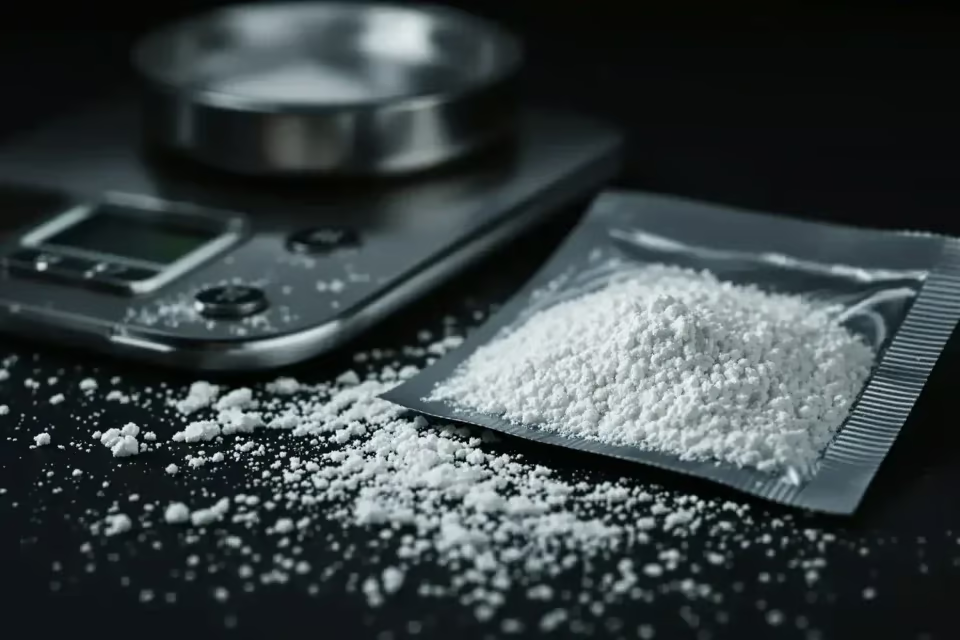
An 8 ball of cocaine appears as a white or off-white crystalline powder weighing approximately 3.5 grams. The substance typically comes packaged in small plastic bags, folded paper packets, or other discrete containers that dealers use for distribution.
Pure cocaine exhibits several distinct visual characteristics:
- Bright white color with minimal discoloration.
- Fine, powdery texture similar to baking soda.
- Crystalline structure when examined closely.
- Minimal odor when fresh and uncut.
Street cocaine often contains adulterants that alter its appearance and texture. Common cutting agents include cornstarch, baking soda, talcum powder, and other white substances that increase volume while reducing purity. These additives can make the powder appear duller, create clumping, or produce unusual textures that experienced users recognize as signs of impure product.
Cost and pricing factors
The cost of an 8 ball of cocaine varies significantly based on multiple market dynamics. Location, purity levels, supply chains, and law enforcement pressure create substantial price fluctuations across different regions and circumstances.
Average street prices
You’ll find 8 ball cocaine prices typically range from $120 to $300 across the United States, with most transactions averaging around $200. The price per gram becomes more economical when purchasing an 8 ball compared to buying individual grams separately.
Price variations depend heavily on cocaine purity levels, with higher-quality product commanding premium costs. Street dealers often cut cocaine with adulterants like baking soda or cornstarch, reducing purity and overall price. Market demand in your specific area also influences pricing, with higher-traffic locations often seeing elevated costs.
Some regions report prices as low as $60-$80 for lower-quality product, while premium cocaine in high-demand areas can reach $350-$560 per 8 ball. How much is an 8 ball of cocaine eventually depends on these quality and location factors affecting your local market.
Regional price variations
Cocaine production countries like Bolivia, Peru, and Colombia offer significantly lower prices due to abundant local supply, with gram prices dropping as low as $6 in these regions.
Within the United States, state-by-state variations create notable price differences. Massachusetts sees 8 ball prices between $100 and $250, while other states with stricter enforcement or limited supply chains experience higher costs. Urban areas with established distribution networks often maintain more competitive pricing than rural locations with limited access.
International markets show extreme variations based on trafficking difficulty and legal penalties. Australia and the UAE report cocaine prices exceeding $260 per gram due to strict drug laws and geographic isolation from production sources. How much is cocaine internationally demonstrates how enforcement and supply chain complexity dramatically impact street prices.
High-law-enforcement areas consistently drive prices upward through increased risk premiums that dealers pass to consumers.
Health effects and risks
When you consume an 8 ball of cocaine, you’re exposing your body to severe immediate dangers and long-term health complications. This significant quantity of cocaine overwhelms your cardiovascular and nervous systems with potentially life-threatening consequences.
Short-term effects
Cocaine’s immediate impact on your body creates dangerous physiological changes within minutes of use. Your heart rate increases dramatically while blood vessels constrict throughout your system. Blood pressure spikes to dangerous levels as your cardiovascular system struggles under the stimulant’s intense effects.
Physical symptoms manifest quickly including chest pain, elevated body temperature, and profuse sweating. Your pupils dilate noticeably while appetite disappears completely. Mental effects emerge simultaneously with paranoia, extreme agitation, and over-excitement dominating your psychological state.
Consuming an 8 ball quantity intensifies these effects exponentially. Binge use patterns develop when you attempt to maintain the high, leading to sleep deprivation lasting days. Your heart and brain experience severe strain as the drug floods your system repeatedly. Medical emergencies become increasingly likely as your body reaches its physiological limits under this chemical assault.
Long-term health consequences
Chronic cocaine use permanently alters your heart’s structure through fibrosis and myocarditis development. Heart muscle tissue dies (necrosis) while your cardiovascular system becomes increasingly susceptible to heart attacks and strokes. Vasoconstriction reduces blood flow while simultaneously increasing oxygen demand, creating dangerous cardiac stress.
Your mental health deteriorates through anxiety disorders, psychosis, and significant cognitive impairments. Paranoia and hallucinations become persistent features of daily life. Memory, attention, and decision-making abilities decline substantially over time.
Physical damage varies by consumption method but remains severe regardless. Snorting destroys your nasal septum permanently while injecting increases infection risks including hepatitis and HIV. Respiratory complications develop including chronic bronchitis and lung damage. Social relationships collapse while financial resources disappear through compulsive drug-seeking behaviors. Professional life disintegrates as addiction priorities override career responsibilities and personal obligations.
Overdose signs and symptoms
Cocaine overdose occurs unpredictably and proves fatal without immediate medical intervention. Your breathing becomes dangerously slow or stops entirely as respiratory arrest develops. Body temperature rises to life-threatening levels while tremors progress into full seizures.
Cardiovascular collapse manifests through heart attack and cardiac arrest. Extreme paranoia intensifies beyond previous experiences while consciousness fades. Physical coordination disappears completely as your nervous system shuts down systematically.
Recognition requires immediate action when these symptoms appear. Emergency responders focus on stabilizing breathing and heart function first. Hospital treatment includes intensive hydration, temperature regulation, and continuous cardiac monitoring. Survival depends entirely on response speed and medical intervention quality.
Medical teams monitor for complications including brain swelling, kidney failure, and permanent cardiac damage. Recovery remains uncertain even with best treatment, as cocaine’s toxic effects can cause irreversible organ damage within minutes of overdose onset.
Legal consequences
Possessing an 8 ball of cocaine carries severe legal penalties that can permanently alter your life. The 3.5-gram quantity typically triggers felony charges across most jurisdictions.
Federal and state penalties
Federal law classifies cocaine possession as a serious crime with mandatory minimum sentences based on quantity. For an 8 ball cocaine possession, you face up to 1 year in prison for a first offense under federal simple possession laws. Repeat offenses carry increasingly harsh penalties.
State penalties vary significantly but remain severe. In Wisconsin, possessing 1-5 grams (including an 8 ball of coke) constitutes a Class F felony punishable by up to 12 years and 6 months in prison plus fines reaching $25,000. Illinois treats possession under 15 grams as a felony with escalating penalties based on quantity.
Some states classify any cocaine possession as an automatic felony, while others distinguish between personal use and intent to distribute. Trafficking charges for larger quantities can result in decades-long sentences and millions in fines.
Impact on personal records
A cocaine conviction creates a permanent felony record that affects multiple aspects of your future. You’ll face significant barriers obtaining employment, housing, and professional licenses as background checks reveal your criminal history.
Felony convictions eliminate certain civil rights including voting privileges and gun ownership in many states. Non-citizens risk deportation and permanent immigration consequences regardless of legal status.
Your educational opportunities become limited as many colleges and financial aid programs exclude applicants with drug felonies. Some jurisdictions offer drug treatment courts focusing on rehabilitation rather than punishment, potentially reducing these long-term consequences through successful program completion.
Treatment and recovery options
Recovery from 8 ball cocaine addiction requires comprehensive medical and therapeutic intervention. Professional treatment programs combine multiple approaches to address both physical dependence and psychological aspects of cocaine use disorder.
Medical interventions
Medical detox programs offer supervised withdrawal management for individuals recovering from 8 ball cocaine use. Skilled healthcare professionals closely monitor vital signs and help manage symptoms such as depression, fatigue, and intense cravings that arise during the early stages of recovery. For comprehensive support beyond detox, enrolling in a drug rehab Indiana program ensures continued care, therapy, and guidance to promote lasting sobriety.
Medication-assisted treatment includes several pharmacological options currently under study. Disulfiram, originally developed for alcohol dependence, shows promise in cocaine addiction treatment by blocking dopamine pathways. Topiramate helps reduce cravings and prevent relapse by modulating neurotransmitter systems affected by chronic cocaine use.
Medical professionals tailor medication protocols to each individual’s specific needs, considering factors like:
- Duration of cocaine use
- Physical health status
- Co-occurring mental health conditions
- Previous treatment history
These interventions work most effectively when combined with behavioral therapies and ongoing medical supervision throughout the recovery process.
Behavioral therapies
Cognitive behavioral therapy (CBT) serves as the gold standard for cocaine addiction treatment, demonstrating significant effectiveness in reducing drug use and improving treatment retention rates. CBT focuses on identifying triggers, developing coping strategies and preventing relapse through structured skill-building exercises.
Modified CBT (M-CBT) offers enhanced benefits for individuals with cognitive impairments caused by chronic cocaine use. This adapted approach uses simplified concepts and repetitive learning techniques to improve treatment outcomes compared to standard CBT protocols.
Additional evidence-based therapies include:
- Contingency management programs that provide rewards for sustained sobriety
- Motivational enhancement therapy to increase treatment engagement
- Dialectical behavior therapy for emotional regulation
- Group therapy sessions for peer support
Role-playing exercises help individuals practice refusing drugs and managing high-risk situations. These behavioral interventions teach practical skills for maintaining long-term recovery after completing initial treatment phases.
Support systems
Comprehensive rehabilitation programs integrate multiple treatment components including medical detox, individual counseling, group therapy and relapse prevention education. These programs address the complex nature of 8 ball cocaine addiction through structured daily schedules and therapeutic activities.
Support groups create essential community connections for individuals recovering from cocaine addiction. Participants share experiences, receive encouragement and learn from others who understand the challenges of overcoming substance use disorders. Regular attendance at support meetings correlates with improved long-term sobriety rates.
Treatment settings offer flexible options based on individual needs:
- Inpatient programs provide 24-hour medical supervision and intensive therapy
- Outpatient treatment allows individuals to maintain work and family responsibilities
- Intensive outpatient programs offer structured support without residential requirements
Aftercare planning provides essential support once formal treatment is completed. It includes ongoing therapy sessions, participation in support groups, and regular check-ins with healthcare providers to monitor progress and prevent relapse. For additional tips, insights, and success stories, visit our recovery blog, where we share strategies to help maintain long-term sobriety.
Sources
- National Institute on Drug Abuse. (June 2023). Cocaine Research Report
- Drug Enforcement Administration. (June 2023). Cocaine Drug Fact Sheet
- Volkow, N. D., & Boyle, M. (2018). Neuroscience of addiction: Relevance to prevention and treatment. American Journal of Psychiatry, 175(8), 729–740.
- Karila, L., Reynaud, M., Aubin, H. J., & Benyamina, A. (2012). Pharmacological approaches to cocaine addiction: Current status and perspectives. European Neuropsychopharmacology, 22(5), 356–370.

