
If you are comparing options for rehab in Kokomo, Indiana, you probably want care that works and a schedule you can keep. Red Ribbon Recovery Indiana provides outpatient addiction and mental health treatment for adults from Kokomo and the rest of Howard County, with in person programs at our Greenwood facility and virtual IOP sessions you can join from home.
The need is real here. Howard County recorded 29 overdose deaths in 2024, a rate of 36.4 per 100,000 residents compared with 24.1 statewide, according to the Indiana Department of Health. For statewide trends, see our update on Indiana overdose deaths.
Drug and alcohol rehab centers in Kokomo Indiana
Addiction care follows a continuum, which means people move between levels of support as their needs change. Someone might start with medical detox, step into a partial hospitalization program, then taper to intensive outpatient and standard outpatient care over a few months. Others start directly in outpatient care because their withdrawal risk is low and their home is stable.
The right starting point depends on what you use and how much, your withdrawal history, any mental health conditions, and how safe and supportive home is. Clinicians use these factors, usually guided by the ASAM Criteria, to recommend a level of care.
Red Ribbon Recovery Indiana focuses on the outpatient stages. Kokomo clients can attend in person at 1411 W County Line Rd in Greenwood, a little over an hour down US 31, or join many sessions virtually. You can review the types of addiction we treat, or read whether you should travel for rehab if you are weighing programs in different cities.
Medical detox for drug and alcohol addiction
For many people, the first stage of addiction treatment is detox. Detox manages withdrawal as substances leave the body. It matters most with alcohol, benzodiazepines, and opioids, where withdrawal can be dangerous or severe enough to trigger a quick return to use.
Alcohol and benzodiazepine withdrawal can cause seizures, so these substances should not be stopped suddenly without medical advice. Detox usually lasts several days to about a week depending on the substance, and medications may be used to ease symptoms and prevent complications.
Detox alone does not treat addiction, so a plan for what comes next matters. Learn more about drug and alcohol detox in Indiana and what happens after detox.
Residential treatment for alcohol and drug rehab
Some people need a live-in setting after detox. Residential or inpatient drug rehab provides 24 hour structure and removes people from triggers at home while they stabilize. It tends to fit people with severe use, repeated relapse after outpatient care, an unsafe living situation, or serious co-occurring conditions.
A residential day usually includes group therapy, individual counseling, and evidence-based approaches such as cognitive behavioral therapy (CBT) and dialectical behavior therapy (DBT). Most people step down to outpatient care afterward, and planning that transition early lowers the risk of relapse in the first weeks home.
For a side by side look, see inpatient vs outpatient treatment.
Outpatient treatment and intensive outpatient programs
Outpatient care lets you live at home and keep up with work or family while attending treatment. This is the stage Red Ribbon Recovery Indiana provides, in three intensities. The table below shows how they typically compare.
| Program | Typical schedule | Often a fit when |
|---|---|---|
| Partial hospitalization program (PHP) | Most weekdays, several hours a day (20 or more hours a week) | You need daily structure after detox or residential care, or instead of it |
| Intensive outpatient program (IOP) | About 3 days a week, 3 hours a session (9 or more hours a week) | You are stable at home but need more than weekly therapy |
| Standard outpatient | 1 to 2 sessions a week | You are stepping down from IOP or have milder symptoms |
Virtual care is a way to attend, not a separate level of care. Through telehealth addiction treatment, many Kokomo clients attend some or all IOP and outpatient sessions by secure video, which cuts out the weekday drive.
Medication-assisted treatment (MAT)
For opioid and alcohol use disorders, medication-assisted treatment (MAT) pairs FDA-approved medication with counseling. Buprenorphine, methadone, and naltrexone are used for opioid addiction. Naltrexone, acamprosate, and disulfiram are approved for alcohol addiction.
For opioid use disorder, MAT is linked to lower overdose risk and longer time in treatment. It works best as part of a full plan that includes therapy and regular check-ins. If you already take a prescribed medication for opioid use disorder, tell the admissions team so your care stays continuous.
Dual diagnosis and a full continuum of care
Many people seeking rehab in Kokomo also live with anxiety, depression, PTSD, or another mental health condition. Treating only the substance use tends to leave the other condition driving relapse, so both need attention in the same plan.
Dual diagnosis treatment addresses both conditions together. Approaches such as acceptance and commitment therapy (ACT) and EMDR therapy for trauma help people respond to stress and difficult thoughts without returning to substances.
Read more about how anxiety disorders and addiction affect each other.
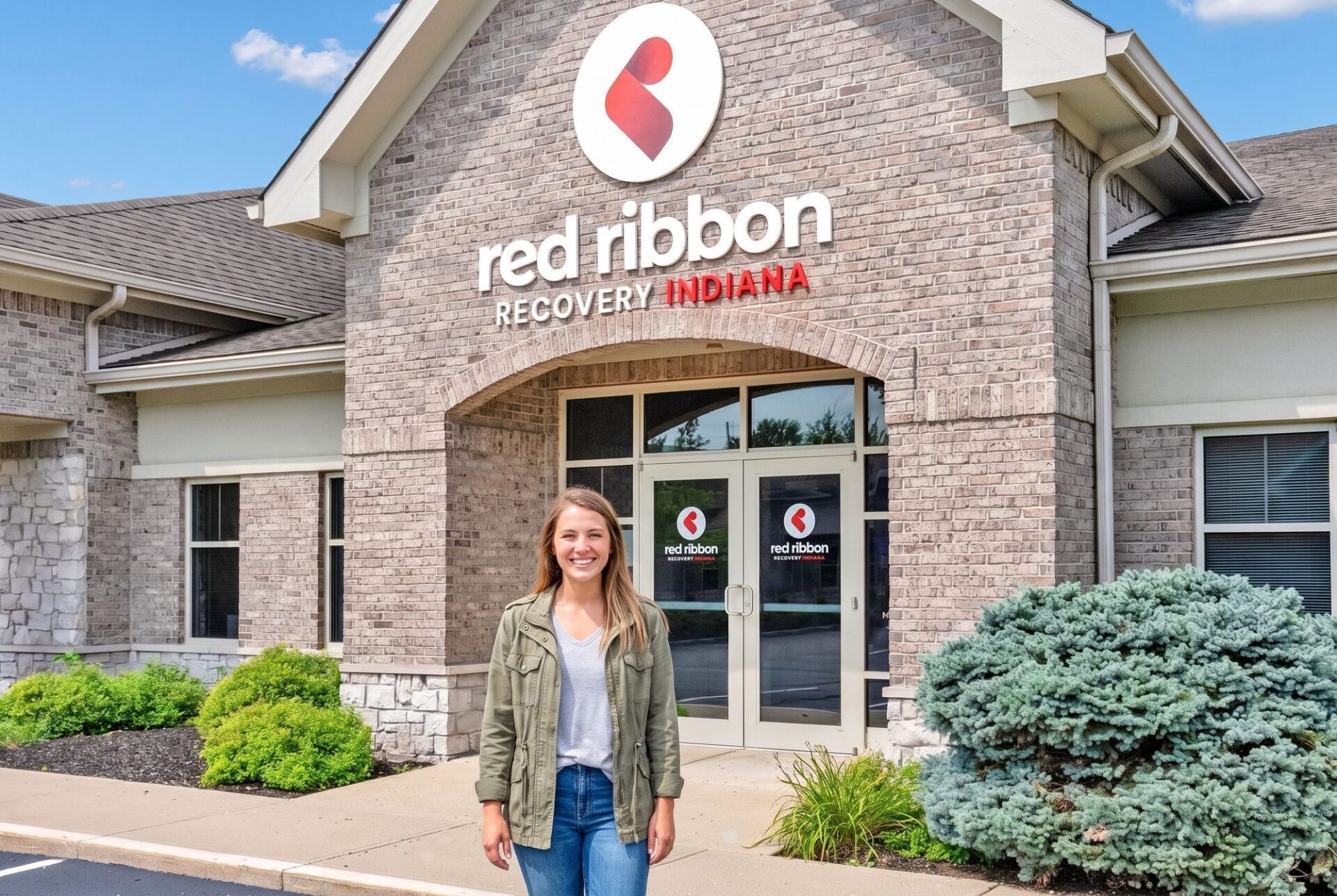
You can overcome addiction. Reach out to discover:
What to expect at a Kokomo rehab center
Starting rehab can feel like stepping into the unknown, especially if you are also managing anxiety, depression, or another mental health concern. Each stage of care, from detox through outpatient treatment, is designed to add structure and build on the one before it.
Treatment covers more than stopping drug or alcohol use. It also means understanding the patterns behind the use, treating mental health needs, and practicing skills you can use at work and at home.
As an outpatient drug and alcohol rehab in Indiana, Red Ribbon Recovery explains each step to Kokomo clients and families before care begins, so the first day holds fewer surprises.
Intake and admissions
Admission starts with a phone call to (317) 707-9848 or an online form. An admissions coordinator asks about substance use, past treatment, physical health, mental health, and insurance, then schedules a clinical assessment.
The assessment sets your starting level of care. If your withdrawal risk or medical needs call for detox or a higher level of support first, the team will tell you directly so you start somewhere safe.
To get ready, review our admissions process and the checklist in how to prepare for rehab.
A typical day in treatment
Outpatient days are built around routine. A PHP or IOP day typically mixes group therapy with individual sessions, relapse prevention education, and skills practice. Clinicians often use motivational interviewing to help people work through mixed feelings about change.
Groups matter. Hearing from people facing the same problems reduces isolation and builds accountability that carries over between sessions.
Because outpatient care happens alongside the rest of your life, you practice new skills at home the same evening and bring what happened back to the next session. Read about a typical day in rehab for more detail.
Family involvement and support
Addiction affects the whole household. Family therapy sessions focus on communication, boundaries, and rebuilding trust, and they help relatives understand what their loved one is going through.
Families need their own support too. Learning the difference between enabling and supporting is one of the most useful steps a parent or partner can take. Our guide on how to help a recovering addict or alcoholic covers practical next steps.
After treatment and ongoing care
Recovery continues after a program ends. Most people step down gradually from PHP to IOP to standard outpatient, then into aftercare with ongoing therapy, alumni groups, and peer support.
Some people add sober living for extra structure in the first months. Others lean on mutual support meetings, and our support groups page covers AA, NA, SMART Recovery, and other options.
A relapse prevention plan written before discharge gives you a clear response if cravings return. See how to stay sober after rehab for practical steps.
Insurance coverage and payment options for rehab in Kokomo, Indiana
Cost depends on the level of care, how long you attend, and your insurance plan. PHP usually costs more per week than IOP, and IOP more than standard outpatient, because each involves more clinical hours.
Red Ribbon Recovery Indiana accepts most private insurance plans. We do not accept Medicare or Medicaid. Federal parity law requires most private plans to cover substance use and mental health treatment on terms comparable to medical care, though deductibles, copays, and prior authorization rules vary by plan.
The fastest way to know your costs is to verify your insurance before your first day. Our guides on how much rehab costs and how to pay for rehab explain deductibles, payment options, and what to ask your insurer. If work is a concern, read whether you can get fired for going to rehab.
Free Insurance Check
Our rehab center accepts most insurance plans.
Check if your insurance will cover the cost of treatment by filling out our confidential insurance form. We accept most insurance plans.

Local things to do while sober in Kokomo, Indiana
Recovery is more than stepping away from drugs and alcohol. It means building a life with enough structure, connection, and interest that returning to old patterns becomes less appealing. Kokomo has plenty of low-cost ways to fill the hours that substance use used to take.
Here are a few sober-friendly options in and around Kokomo.
- Trails along Wildcat Creek. Walking or biking the creekside trails gives you movement, fresh air, and a reliable way to reset after a hard day.
- Highland Park and Jackson Morrow Park. Both offer green space for a quiet walk, a phone call with a sponsor, or time to think without distractions.
- Seiberling Mansion. The Howard County Museum is a calm place to spend an afternoon and learn about the city’s history.
- Kokomo Downtown Farmers Market. Seasonal market mornings are an easy, alcohol-free way to get out and see people.
- Community events. Events at the Kokomo Event and Conference Center and other local gatherings give you options that are not built around drinking.
- Mutual support meetings. Area 22 Northern Indiana, the regional Alcoholics Anonymous service body, lists in person meetings across Kokomo (District 77). If you have never been, read what to expect at an AA or NA meeting, or learn how a 12-step program works.
Activities like these help rebuild routine and give recovery something to grow toward. For more ideas, see our post on building a routine in recovery.
Rehab might feel like a big step, but remember why you're here. You’re looking for a way forward. We can help.
Key Takeaways
- This Kokomo, Indiana rehab center offers support for individuals and families struggling with drug and alcohol addiction and mental health challenges.
- They provide guidance, education, and real support to help individuals understand their options for mental health care and addiction recovery without pressure.
- Individuals seeking help or direction are encouraged to contact them at (317) 707-9848 to begin the process.
Frequently asked questions
How do I choose the right rehab option in Kokomo, Indiana, for my situation?
The right option depends on how severe your substance use is, your withdrawal risk, any mental health conditions, and how stable your home is. A clinical assessment uses those factors to recommend a starting level of care. People with high withdrawal risk may need detox first, while many others can begin in a partial hospitalization or intensive outpatient program. Kokomo residents who want to limit driving can ask about virtual sessions.
What is the difference between inpatient and outpatient treatment?
Inpatient or residential treatment means living at the facility with 24 hour support, which can help during early recovery or when home is not safe. Outpatient treatment means living at home and attending scheduled sessions, from several hours most weekdays in a partial hospitalization program to one or two sessions a week in standard outpatient care. Many people use both at different points in recovery.
Does addiction treatment also address mental health conditions?
Yes. Many people seeking addiction treatment are also dealing with underlying mental health conditions such as anxiety, depression, or trauma. Effective programs often include mental health treatment alongside substance use care. This approach, sometimes called dual diagnosis care, helps address both issues simultaneously, supporting more stable, long-term recovery.
How does medication-assisted treatment work during recovery?
Medication-assisted treatment (MAT) uses FDA-approved medications such as buprenorphine, methadone, or naltrexone to reduce cravings and withdrawal, combined with counseling. For opioid use disorder, MAT lowers the risk of overdose and helps people stay in treatment. Medication decisions are made with a prescriber based on your history and health.
What happens after completing a treatment program?
Recovery continues after a formal program ends. Many individuals transition into outpatient therapy, sober living, or structured aftercare that includes support group meetings and aftercare alumni programs. Ongoing support is an important part of maintaining progress and building sustainable recovery over time.
How do rehab centers in Kokomo Indiana support recovery through outpatient care?
Outpatient programs let people keep working or caring for family while attending therapy, relapse prevention planning, and peer support on a set schedule. A partial hospitalization program offers the most hours, intensive outpatient fewer, and standard outpatient the least. Red Ribbon Recovery Indiana offers all three, with in person care in Greenwood and virtual sessions for many Kokomo clients.
How do rehab centers in Kokomo Indiana support long term recovery?
Long term recovery depends on what happens after the most intensive phase ends. Strong programs step people down gradually, build a written relapse prevention plan, involve family where possible, and connect people to aftercare and peer support such as AA, NA, or SMART Recovery. Ongoing therapy for co-occurring mental health conditions also lowers the risk of relapse.
What should someone expect during treatment at a kokomo rehab center?
Expect an intake call, a clinical assessment, and a treatment plan based on your substance use history, mental health, and goals. Most outpatient days include group therapy, individual counseling, and skills practice. Your plan is reviewed as you progress, and your level of care can move up or down as your needs change.
Can rehab centers in Kokomo Indiana help with co occurring mental health concerns?
Yes. Anxiety, depression, trauma, and other conditions often occur alongside substance use, and treating them together improves outcomes. Dual diagnosis care combines mental health assessment and therapy with addiction treatment in one plan.
How can rehab Kokomo Indiana programs help individuals rebuild healthy routines?
Structure is one of the first things treatment rebuilds. Regular session times, steady sleep and meals, exercise, and planned sober activities fill the hours that substance use once took. Therapy helps people spot triggers in their daily schedule and plan around them.
Rehab centers in Kokomo Indiana for addiction recovery
If you or someone you love is struggling with drugs, alcohol, or mental health in Kokomo or anywhere in Howard County, you do not have to sort out the next step alone. A short call can answer whether outpatient care fits, what your insurance covers, and how soon you can start.
Red Ribbon Recovery Indiana is located at 1411 W County Line Rd, Suite 1411A, Greenwood, IN 46142, with in person and virtual programs. Call (317) 707-9848 or contact us to get started, and read our reviews on Google.
If someone is unresponsive or not breathing after using drugs, call 911 right away. Our guide to naloxone and overdose prevention in Indiana explains how to respond.
We are here to help you or a loved one find addiction treatment near you.
Admitting you have a substance abuse problem and asking for help is not always easy. If you or a loved one are struggling with drug addiction, alcohol addiction or another substance use disorder, help is available. You can visit SAMHSA’s National Helpline to learn about resources in your area or reach out to our team by calling (317) 707-9848 to explore personalized treatment.
Treatment center reviews
Sources
- Indiana Department of Health. (2025). Fatal overdose and suicide report, 2024. Division of Trauma and Injury Prevention.
- Inanlou, M., Bahmani, B., Farhoudian, A., & Rafiee, F. (2020). Addiction Recovery: A Systematized Review. Iranian journal of psychiatry, 15(2), 172-181.
About the content

Written by: Carli Simmonds. Carli Simmonds holds a Master of Arts in Community Health Psychology from Northeastern University. From a young age, she witnessed the challenges her community faced with substance abuse, addiction, and mental health challenges, inspiring her dedication to the field.

Medically reviewed by: Jodi Tarantino, MSW, LICSW. Jodi Tarantino is an experienced, licensed Independent Clinical Social Worker (LICSW) and Program Director with over 20 years of experience in Behavioral Healthcare. Also reviewed by the RRR Editorial team.
Red Ribbon Recovery is committed to delivering transparent, up-to-date, and medically accurate information. All content is carefully written and reviewed by experienced professionals to ensure clarity and reliability. During the editorial and medical review process, our team fact-checks information using reputable sources. Our goal is to create content that is informative, easy to understand and helpful to our visitors.